Midnight is closing in on its second full week available to all players, and I think there are two contradictory sounding statements I can make that describe how I feel about it and where I think the expansion is going. Put simply, these two statements define what I want to discuss today while I provide a review of my time so far in the expansion:
Midnight provides more of the same for players who like the retail WoW experience.
Midnight tries some interesting new things and takes some risks with mixed results.
The Good
Eversong in Reprise
When they announced the Worldsoul saga and explicitly pitched us returning to old areas as our “new” zones for both a chunk of Midnight and for The Last Titan still to come, I was…apprehensive. On the one hand, I am the Internet’s foremost Cataclysm Defender ™ and so I have a sort-of staked-out position in the notion that revamping old zones and bringing new life to them is a generally good thing. And I do believe that genuinely! While Cataclysm perhaps needed to stick the landing better and provide a way to experience the history, Cataclysm’s world revamp wasn’t inherently bad and I like that it reflected the progress made in each zone on the base stories they launched with while also reflecting the then-current destruction of Deathwing. Doing that to zones in a more narrow approach felt like it could pay off – but the zones they targeted with the Worldsoul saga carried an inherent risk, given that they are immensely popular zones with a lot of fond nostalgia tied up within them. Many many WoW players ran their first characters through the golden boughs of Eversong, and Wrath of the Lich King was arguably peak WoW so The Last Titan has a high bar to reach.
My apprehension melted once I finally properly explored the revamped zones, and it was replaced with a certain giddiness over what theoretically could come in a revamped Northrend in a year and a half.
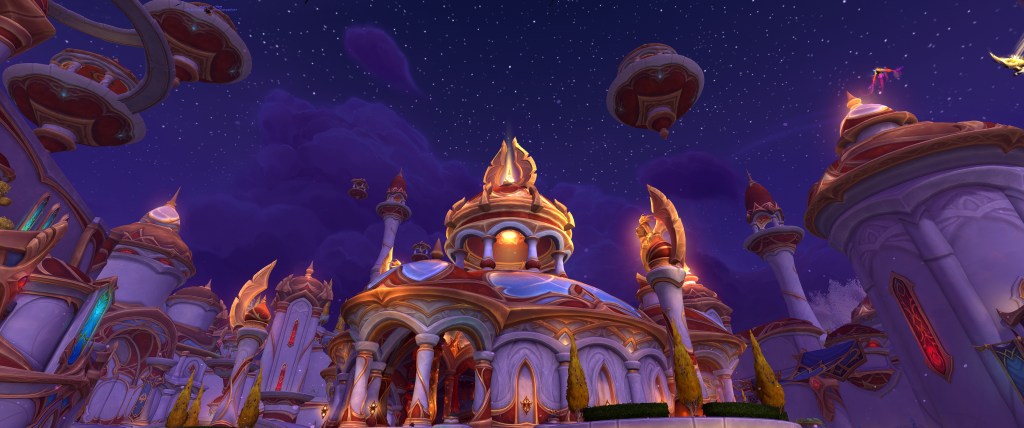
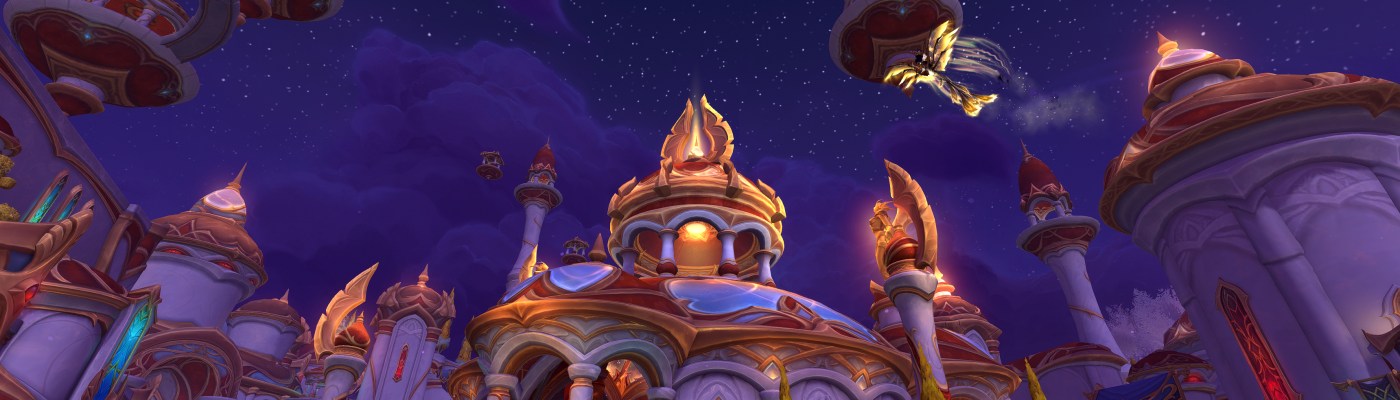
Eversong reflects the original state of the zones (it combines Ghostlands into a new larger zone still called Eversong Woods) but also reflects the march of time. The Blood Elves have been busy cleaning up the Dead Scar, which no longer exists save for the river-like bed it occupied still being a part of the zone geography, Silvermoon has been repaired and reunited with the ruins half now being the bulk of the city while the original Blood Elf capital city layout forms the Horde-exclusive area within the city, and a bridge between Silvermoon and Quel’Danas has been built, connecting us to a restored and beautiful Sunwell, an HD remastered Shattered Sun area, and the new version of Magister’s Terrace. There are world quests in the area where Blood Elves started as fresh characters that mimic original quest objectives you might have done at level 1, there’s still a dark secret tucked away in Deatholme, and the zone’s eastern border still is populated with trolls and the Amani ruins that led into the Zul’Aman raid/dungeon, but now lead into the newly remastered and expanded zone (oh, and there’s a Delve now that uses a chunk of what was once the raid/dungeon map, meaning ZA might be the first piece of WoW instanced content to have a world zone, raid, dungeon, and delve. Now we just need an Atal’Aman battleground and an arena map to really make it the most used landmass in all of WoW history!)
These remastered versions show a certain reverence for the original source material and a forward movement of time that is both story-relevant and well-supported by existing lore. The Blood Elf heritage armor quests, both the regular heritage quest and the Blood Knight one added in Shadowlands, indicate that the Blood Elves are trying to fix the Dead Scar, that it remains an open and infested wound upon a hurting people but one that they are working to heal, both in terms of the psychological damage to their people but also literally healing the land, and by the time we reach Quel’Thalas 2.0 in Midnight, they’ve actually done it! The blight is gone, Silvermoon is whole, and the spot of Ranger-General Sylvanas’ death and conversion to Banshee Queen by the evil Arthas is marked with a statue of Sylvanas in Ranger-General glory. Kael’Thas statues have been removed (one is at the bottom of a lake which is interesting as a small detail…) and the Blood Elves are well-adjusted to their role in the Horde and less so to the role of Silvermoon as a unified base of operations for Horde and Alliance alike. The same is true of Zul’Aman, which references the raid heavily in both Blizzard-funny (there are ghosts of raiders running through the old raid boundaries that you can kill and who quip about repair costs and cooldowns as they get flattened) and well-built story ways (the story of Zul’jin and the subjugation of the Loa at Zul’Aman is the major lynchpin for the zone story, as is the relationship between the Amani and the Blood Elves) and it’s really actually all quite cool.
I’m not heavily nostalgic for The Burning Crusade (I think it is actually WoW’s worst expansion, at least to me) but I really like how these revamped areas feel brand new while also having that clear respect for the original versions. And, to be honest, the thing I most like about seeing them stick the landing on these revamps is that it has led to me being irrationally excited to see how Northrend is tackled next expansion, because Wrath of the Lich King is quintessential WoW to me and is the expansion that most solidified my love of this game. Even though I know revamped zones carry a stigma (just remember the complaints of “recycled” content all the way back with Wrath Naxx or the Cata troll dungeons), I think these versions carry enough novelty and interest to be great and that’s why I find myself so very eager to see what the future holds. WoW can only conjure new worlds and previously unknown islands for so long without it feeling forced and lazy (and we’ve arguably passed that point by like a decade ago tbh) so finding ways to tell new and continuing stories alike in revamped zones is huge.
Writing Effort
I’ve been sharply critical of the story of WoW for a long time now, because I feel like at some point around the handoff between Chris Metzen and Alex Afrasiabi (famed woman harasser), the story just kind of started to shit the bed and never really cleanly rebounded. The Danuser era between late BfA and The War Within was kind of just bad, because while I know Steve Danuser can write good MMO stories (that’s how he got the chair on WoW in the first place!), WoW just never really meshed with his writing style and there were a lot of heavy lore bombs that Afrasiabi clearly tossed into the pot before he got ousted from Blizzard that just kind of never got resolved well. I think the biggest problem has been reconciling these existing concepts while also setting expansions in new places – the Shadowlands was a very strange location to resolve a lot of existing character stories, and the Dragon Isles was a break from the story we’d been getting to that point that also required shoehorning the Dragonflights into our plot threads in a way that felt sort of weird at the time. The War Within clearly suffered from narrative changes while in development, as it feels very apparent at this point that Harandar was originally intended for TWW (an early version was in the alpha files of TWW, there’s a passage in Azj-Kahet that leads to where it would have been that still exists and gives you drowsiness and a teleport back if you push too far, and the Haranir allied race assets have existed in the WoW files since 11.0), on top of just throwing a lot of different and loose plot threads at the wall (Undermine in general, the unsatisfying way we talked about Black Blood, the Nerubian society, K’aresh) and seeing what sticks and what doesn’t.
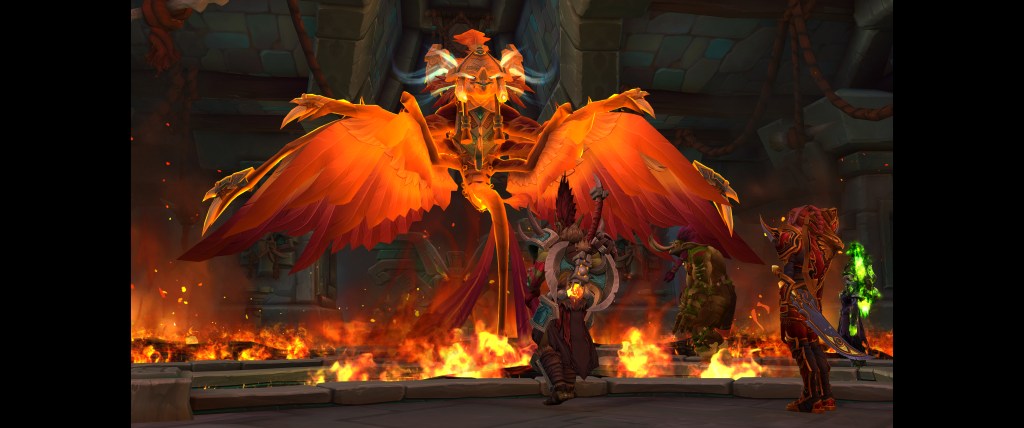
Midnight changes that, and I am so happy it does. The story has a strong grounding in WoW past, with a large part of the Eversong and Zul Aman stories focusing on the history of these civilizations and their responses to the threat of the Void and their hostilities to each other. It tackles interesting and mature concepts, like discussing the Blood Elf colonization of the Amani, discusses the Zul Aman raid as an understandable consequence of the negative actions of Zul’jin while also correctly asking how long the Amani should suffer the consequences of those actions, and that grounding in WoW-past gives the story a decent basis to rest upon that serves the narrative very well. WoW’s modern lore struggles to find grounding in-universe and the first half of this expansion does a really good job of leaning into the existing history and embracing it to tell a new tale that still honors the original. As with the revamped zones, there is a strength found in this approach. Speaking of…
Arator’s Journey is a Novel Leveling Concept
WoW expansions have been basically 4 zones since Shadowlands (which was 5 if we count the Maw but also the Maw was sort of a limited-time shitshow that we didn’t do much in until 9.1). Midnight is 4 zones…but the addition of Arator’s Journey as a leveling campaign thing adds much-needed depth to improve the game. Arator’s Journey is a brief jaunt that pushes players out of the new and shiny Midnight areas and into the Classic world to retell some old lore and use it to frame the current story. While I have some quibbles we’ll get to on that later, I really liked this campaign chapter a lot. Sure, it has some scaling wonkiness (you get scaled up mobs that drop Classic levels of copper and Classic trade materials), but the use of the old world and the specific push out into really old zones to tell foundational Warcraft lore is a cool idea and something I think I would love to see more of. Outside of just straight up revamping zones and using them again, going back out into the old world and getting to live in the larger Azeroth for current content and new stories is really neat. I don’t think the retail game should ever go back to the world-spanning travel of Classic questing – it’s a different flavor that isn’t really suited for retail as it exists now, but I like this form of it as a way to capture some of that vibe while doing it in a modern way. It’s also an attempt to showoff for Blizzard – for the first time, the new expansion zones (well, two of them at least) are properly integrated into the Eastern Kingdoms map, so the first quest in this line has you simply fly to Light’s Hope as a way to showcase that you can just…do that. Minor thing, but given it’s a first in WoW, it is actually mindblowing to just…follow the arrow with no loading screen or break.
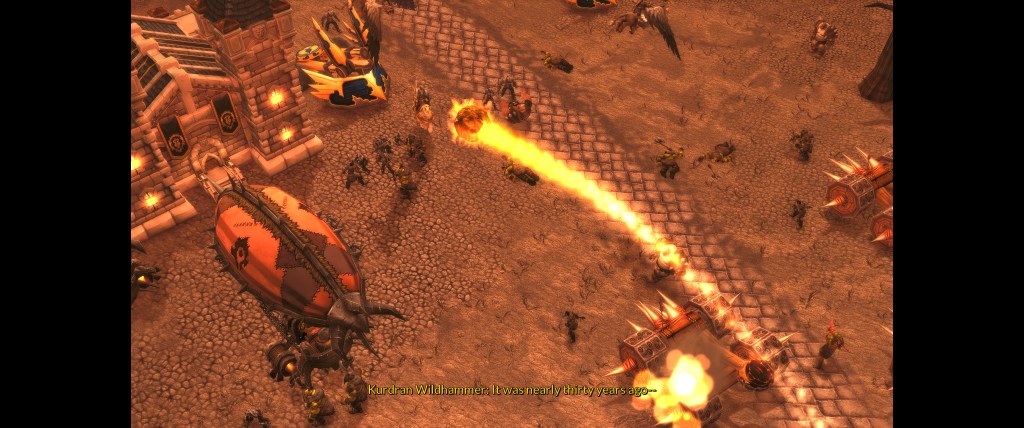
Even with some flaws we’ll get into later, I really like this as an experiment and I can see how this could continue forward in a similar fashion. The Last Titan is begging to send us to every Ul-installation in Azeroth to learn more about the Titans, Old God content could send us into the various locations of their corruption, etc – there’s a rich tapestry of stories you can tell that leverage the existing world sans revamp to present an interesting twist that isn’t all new zones and glossy HD content. In fact, I vastly prefer this idea to Lorewalking, which I kind of liked but which also feels very out of the way and forced while this experience allowed me to remember key details about Turalyon’s RTS-era story before he…well, we’ll get there later too.
WoW’s Third Era Is A Fine Formula
When Dragonflight was launching, Blizzard boasted in interviews about how it marked the “Third Era” of WoW. At the time, it felt like a weird proclamation, because what changed? But with hindsight, I think that the biggest thing is that this current era is really about selecting your preferred activities and having a series of small bites of content you can do for decent rewards. Instead of having a chore list of things you have to do or a forced progression through a series of attunements and tiers of raids in sequence, you have a big list you can pick from and maximizing rewards really only takes doing a couple of things, so you can choose the stuff you like and eschew doing anything else if you so desire. With the cache system that was added and adjusted throughout TWW, there’s a pretty solid base formula here for lots of players. So while both TWW and Midnight have made additions of things you can do (Delves in TWW, Prey in Midnight), the base formula is still simple – 15-30 minute small tasks, 2-4 things a week for good rewards, more you can do with diminishing rewards if you’re really enjoying it, and focused on gear progression and slow, measurable gains in player power alongside a smorgasbord of cosmetics. Housing, while not strictly a gameplay system in the same vein, expands upon this pretty strongly by vastly opening up the cosmetic reward options, reinforcing the core loop of this era further. While the new systems do add to it, the core formula is basically the same, so if you have liked Dragonflight and/or TWW (as I have) then you are basically signing up for 18-20 months of the same gameplay loop in new places, which sounds bad when stated as such but that’s live service gaming and honestly – it’s a good formula, in my opinion.
The Addonpocalypse Not Being That Bad
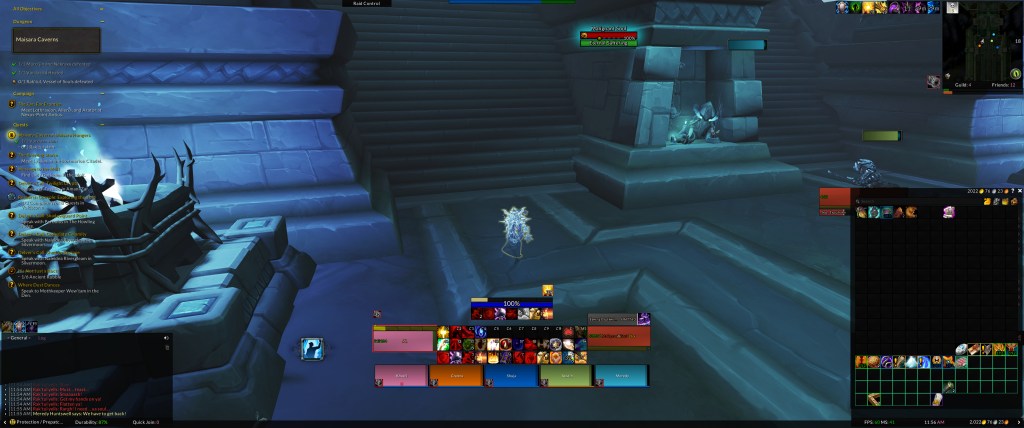
Now that we can see the final state (for now) of the addonpocalypse and the content designed around it, I think the overall impact hasn’t been too bad. I was able to build a new UI that gives me most of what I had before, the content I’ve done so far with any bite (just M0s, Tier 7 delves, and Hard-level Prey) is pretty well designed around it, and while Blizzard still has room to improve (there are STILL Blizzard-native UI elements that can generate LUA errors and violations of the black box policy without any addons, and they keep making small changes that push huge errors like making your Guild Message of the Day a secret value in combat), the overall state of things is pretty decent at this point. I miss WeakAuras a bit and if I played a class that needed to track debuffs more I’d be less pleased (the second I level Destruction Warlock and can’t track Havoc on targets I will cry), but for my purposes, I have enjoyed the experience overall. That being said, I do think that the pruning missed the mark some, as while Blizzard has streamlined the number of buttons people hit on average (usually every spec loses a rotational button compared to TWW and usually two-plus additional utility buttons alongside), they haven’t necessarily smoothed over the synergistic interactions of talents with abilities or made tooltips that update to reflect talent choices, meaning you can miss a ton of nuance in your build if you use a guide without reading each talent (which has been a failure of the new talent system since Dragonflight to be fair) and there are a lot of performance gains to be had in those small nuances. Having said that, I do think this was more of a success than I expected it to be, even with the teething pains (which are exceedingly silly and annoying at times but hey). We’ll also be revisiting this in a bit for a bad side!
The Mixed
Prey
I really like Prey overall. I think it’s a great idea and a way to add more meaningful stuff to do in the open world of WoW. Delves are considered as world content, but they’re just instanced dungeons you can do alone behind a fancier smokescreen to hide loading (literally). Heroic world tier in Legion Remix was an interesting idea, but it was just basically hard scaling that eventually sort of lost the plot as soon as you had enough gear and/or Infinite Power to bring it in-line. Prey is objective-focused, rewards exploration, and puts player power into the open world in a way that encourages you to do more in it – which is great, right?
In theory, yes.
In execution, however, Prey has turned into an optimization game where your goal is to go to the World Quest it gives you, never do the objective, and click traps until you can go engage the duel. Normally, I don’t fully buy the “optimization kills fun” argument because I think it is overly idealistic and rose-tinted towards the past when we were all naive idiots – but in this case, yeah, I kinda see it. Prey suffers from this because while the trap trick optimization gets you to the “fun” part faster, it strips out the exploration component nearly completely. However, even if you do Prey as intended, it kinda just doesn’t feel as engaging as I want it to be. Blizzard’s in-game explainers for this are extremely poor, because they want you to spend a couple of hours rolling around picking treasures and killing rare mobs to slow-march progress, but there’s a finite number of those things you can do and instead the way most players will actually find progress and not frustration with it is by pulling enemies as densely as they can and waiting to get ambushed, then following that event chain through and repeating.
So on the one hand, I like Prey a lot, because easy rewards, more engagement with gathering on alts while I pursue my mark, and low time investment. On the other hand, I kind of don’t like Prey because it feels too thin and longwinded to do as-intended but too simple and dull to do efficiently. I think it would better capture the idea of hunting our prey if we could effectively control the ambushes more, like items that could draw them out of hiding by force, intel gathering where we can interrogate NPCs for clues or have different active clue doodads in the world that let us hone in on their location, or even just a meaningful progress bar that we can fill with theme-adjacent tasks instead of general zone gameplay. Like the Death Knight hunt target could have us seeking out ghouls or defiled grave sites, the Ethereal NPCs could see us tracking arcane energy, etc – things that add specific flavor to each mark instead of the generic tasks alongside slightly-different element traps in the world quest area. Getting achievements for each is cool, but there’s just not enough flavor for my liking and it feels like the emphasis on the targets in some aspects could be amplified in a fun way that would make the system stand apart more. As it stands now, I want to like Prey (and we’ll see what Nightmare brings next week) but for now I like it as an efficiency play and less so as a gameplay mode. The difficulty modifier for Hard is also not terribly challenging, but I’ve also only leveled and played tanks at 90 so far and I know that healers and especially DPS have a rough time with Prey depending on gear and play skill so hey.
The Story in the Fully New Zones
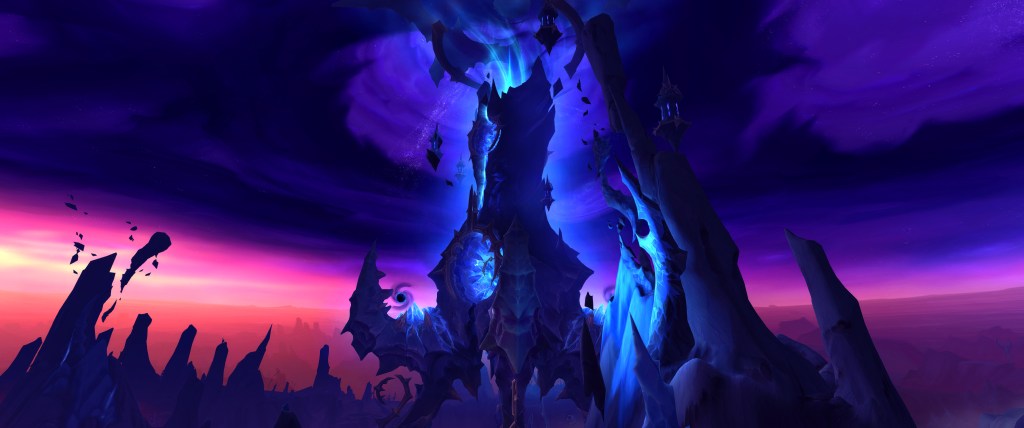
Harandar and Voidstorm are beautiful and interesting zones with lots of cool stuff to see. The stories in them? Eh…not as compelling.
I want to say they’re here because they aren’t particularly bad or anything. I liked them well enough, and they flesh out some interesting details about the world, the Worldsoul, and the void. It’s clear as day that the Haranir’s goddess Aln’hara is Azeroth’s worldsoul and that her silence to her adherents in Haranir is a mirror of what Magni went through and we got to see last expansion – which makes me wish all the more we had Harandar in TWW as originally planned, because it provides actual Worldsoul context to the Worldsoul Saga! Harandar being the origin point for the roots of every World Tree is also fascinating, as it gets to have a heavy segment of dealing with Teldrassil’s scorched roots, the new growth of Amirdrassil, and the corruption of Val’Sharah’s Shaladrassil manifesting as Lightbloom corruption in Harandar. Voidstorm is a bleak and desolate place where we get to see the nature of the Void and the ruthlessness of a dying planet. However, neither zone story felt particularly as well-grounded or interesting as those in Eversong and Zul’Aman. Voidstorm is mostly in service of the attempt to greyscale the morality of Light and Void, as we see positive Void and negative Light, and the story falls a little flat for that, while the narrative of the Voidstorm as a concept is kind of just okay. I liked Harandar’s story more, but again, it felt like it really fully belonged in TWW and something else would have been a better fit for the specific theme and ideas we’re dealing with in this expansion.
I think the biggest thing these zones lack is grounding, because that foundation of old lore made Eversong and Zul’Aman feel a lot better while the new storytelling manifesting in these two zones is nearly fully new lore which just isn’t as strong. Harandar at least rests more on established ideas and benefits from that, so hey. I was super excited to see more interesting stories after how much I did like Eversong and ZA so these fell a little more flat here than they would have in a modern WoW expansion with all new zones, which I can understand is a comparison to a hypothetical but it is what it is.
Dungeon Design
I’m generally enjoying the Mythic dungeons so far in Midnight. However, I think the thing I dislike so far is that they have a lot of peculiarities that just feel forced. Blizzard has stated publicly that an intent of dungeon design in Midnight is to reduce big pulls by making them extremely punishing with loss of control, and there are several good examples of that. Magister’s Terrace 2.0 absolutely leans into this, as too many packs in the first half have Polymorph casters that will get harder to interrupt as you fold more of them into a pull, and the back half has big void elementals that cast a fear such that even two packs with them pulled can become nearly impossible to keep fully locked down. And like sure, okay, fine, for Mythic Plus this will make interesting strategic gameplay and I’m reserving more judgment until we get to run some keys, but it also ends up being kind of irrelevant in lower difficulties because the consequences are only severe if the group as a whole lacks player skill. Most normal and even Heroic runs are still buzzsaw blasts through dense trash pulls where even if every Polymorph, Fear, and Hex cast goes off, there’s rarely a real big threat, and even in Mythic base dungeons, a solid tank with at least one good interrupter can still up the trash density to keep dungeons flowing, so it feels overly punishing to the average player while being of little consequence to the skillful ones, which is a recurring theme of a lot of the addon changes and accompanying design changes. It’s a case where Blizzard clearly wants to force a style change of gameplay communicated solely through design, but many players won’t have to learn the lesson because the consequences don’t often catch up to them.
The Bad
The Overarching Story
Okay, I want to try to avoid this being rant territory, so I’m taking a deep breath behind the keyboard and closing my eyes briefly to relax and bring down my blood pressure as I ramp into this section.
Blizzard clearly wants Xal’atath to be a big brand name villain. She’s taken the spot Sylvanas had on the marketing for a lot of the bad years and nearly every single Midnight promotional thing that isn’t about Housing features her. Sure, okay, fine. However, let’s get it out of the way – she’s not that interesting. As a dagger ghost in Legion, sure, maybe. When we released her in BfA to roam free and she sold us out to N’Zoth? Okay, kinda cool. But she just shows up, monologues about things, and then disappears, working towards some nebulous goal without any clear path or rationale presented. You can only keep her plan shrouded for so long before it just becomes dull, yeah? She has an interesting backstory, and her Lorewalking chapter was actually pretty fascinating because they portray a very different idea of her relationship to the Void, as does the little tidbit in the Salhadaar animated short we got prior to launch that she was mortal once – but it just feels like we aren’t paying this off in any real meaningful way because she gets so little screentime and when she is on-screen, it tends to be as a moustache-twirling villain stereotype instead of as an actual character with motives and goals. Iridikron in Dragonflight was so much more interesting because he clearly stated his goals and it was left ambiguous as to his motivations – he fucking hates the Titans and wants them and their order dead, but the full extent of why he feels that way is still sort of a guarded thing. Xal’atath is somewhat the opposite – we have some sense of her motivation but no idea what her actual goal is beyond the accrual of power, and even that doesn’t necessarily ring true either. If she turns into a meta-commentary about players seeking more power for unknowable ends, well that could be kind of fun (I really liked that style of twist in Hotline Miami, the way Zenos turns that on players at the end of Final Fantasy XIV’s Endwalker expansion, and I would kind of love it here too), but I don’t think Blizzard has the balls (yeah I’m saying it) to really twist the knife (ha!) like that and have Xal’atath be a reflection of the player character in that way. So she just kind of sucks for now, and I hate that because she is a well-performed character who has an interesting backstory and I want to have something to dig into there but the game is just not giving it to me and I hate that.
I think the second problem I would identify with the overarching story is a lack of focus. To the point about Xal’atath, a big part of the problem as with many WoW expansions is that the launch story is a fragmented affair that is actually 4 smaller zone stories, Arator’s Journey as a piece that weaves in and out of the main narrative and zone narratives, and then a small piece of endgame story that tries to bind the zone stories into a centralized narrative that we run with into the patch stories to come. Right now as we can see it, there isn’t really a huge main narrative, but instead a series of subplots without a lot of connective tissue, so the endgame unifying story feels almost like a separate smaller plot than a real meaty story. On top of that, this is supposed to be part 2 of a sweeping narrative trilogy but we just have not seen a whole lot of consistent plot on that front either, and that feels bad! We’ve almost completely lost the plot of the Radiant Song and the whole thing that kicked it off in the first place! We’ve also completely lost sight of the Titan idea at this point and we already had a flimsy foundation there in TWW, which ironically presented less interesting info about the Titans than Dragonflight.
On top of all of that, this expansion is also supposed to be about the unity of the Elves of Azeroth, seeing all the Elves band together to save the world, and while there is stuff to come on that front that was datamined, it’s…uh, shaky, to put it mildly. Obviously we need to see the full end-product presentation, so I am holding off on spoiling or making any broad declarative statements here just yet, but so far I think I can say I am thoroughly whelmed by the content of the story as a whole narrative. There’s one piece of it that actively kind of pisses me off though, well two, and let’s get into those in sequence…
The Shades of Light and Void
It is clear a major focus of WoW’s storytelling for years now has been to greyscale the once-solidly defined core concepts of the universe of WoW. In particular, around Legion, a clear effort began to add a corruptive taint to the Light and a clear positive ideal to the Void – the Light is about obedience and service, the Void is about achieving your goals through all available means, and such – efforts that attempt to pull both towards moral ambiguity such that the Void is no longer clear evil and the Light is no longer unambiguous good. On paper, I love this – the idea that the telling of this world’s story is about perspective and that the balance of these things is necessary is a great way to invoke real-life parallels and imbue the story with potential for heroes and villains of all stripes.
My problem is that Midnight does this by forgetting the characterization of two of the leading figures of Light and makes them into lesser characters as a means of communicating this idea.
Lothraxion was such a cool concept in Legion, a lightforged Dreadlord, proof that the Nathrezim are not all evil but could instead be whatever they wanted to be, not inherently locked to a dark fate. He was also portrayed as relatively level-headed and calm, a leader figure who served with the Army of the Light in their thousand-year war and maintained composure against all else. He was even friendly with Alleria as she went down the path of the Void, willing to understand and remain alongside a friend even as their journeys took different forms. In Midnight, Lothraxion is a hot-headed asshole who bristles against the void, seems surprised at the darkening of a Naaru (never mind the number of times it has happened and that he has been around to witness it), and goes insane in Voidstorm such that we end up having to kill him. This character looks like Lothraxion, but is nothing like the character we saw in Legion (and we got a chance to see that character again thanks to Legion Remix, which I am convinced now was the real story goal of having Legion Remix when we got it). Lothraxion has so much potential as a character, to be a bridge between Arator and Turalyon, and instead he just becomes a zealous overbearing douchebag who forces our hand into putting him down. We get no lip service to the Shadowlands lore tidbit that he might be a betrayer working against the Light or against us, we get no respect for or honor of his original characterization, he’s just driven mad by his hatred of the Void such that he pays for it. If we got a glimpse of Lothraxion’s original character in that, an attempt to have it be a slow-burning turn towards madness, that would have been really swell. Instead, it feels so empty and meaningless, especially because he is such a cool character from that prior portrayal that this being his finale (at least as far as we know) just sucks, man. He’s likely to return (as Dreadlords tend to) but I don’t have high hopes for that being a particularly good moment either, sadly.
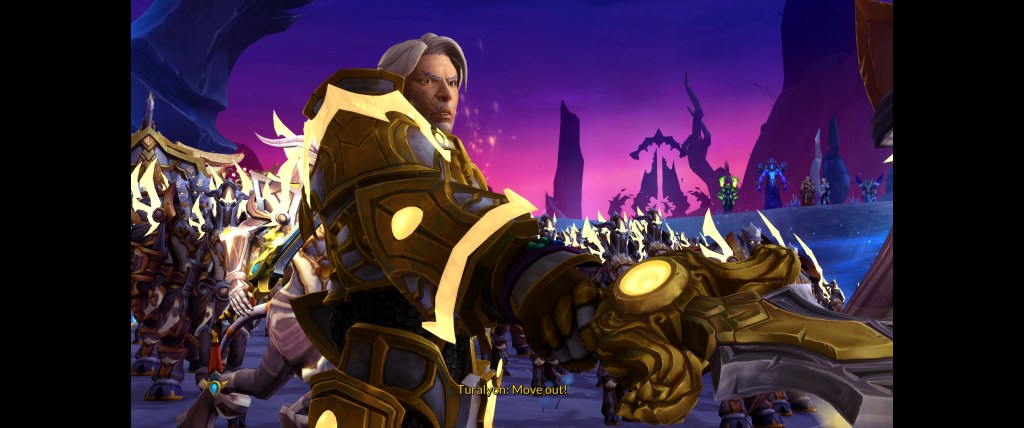
Turalyon is suffering a similar characterization that I fear fates him for the villain bat. His portrayal before was soft-spoken, mission-focused, and compassionate. His small bursts of rage, like at Illidan when he refuses the Light from X’era in Legion, are understandable in the context of a general who has been leading the Army of the Light for longer than he should even live as a human and has watched what he believes to be their only hope go up in smoke, but they were small and self-contained and he ultimately comes around. In TWW, he got 5 minutes of appearance to set up that he’s just so gosh darn conflicted about his relationship with his wife as she embraces the Void, wanting to be at her side but feeling the gulf between them, and dang, that is super interesting. It’s a big shame that so far we don’t explore that much in favor of making Turalyon a bastardized version of his character that is falling down the same zealotry hole that Lothraxion did but on a longer timescale. It’s clear that we are supposed to start to dislike Turalyon, and I do, but some of what happens to force that isn’t really his fault. The Eversong finale is presented as this dramatic moment where he nearly strikes down his only son, but it’s not like he chose that – Arator did, and these lore NPCs aren’t presented as having superhuman reflexes such that he could change that outcome even if he tried. Through the Legion story lens, we can sort of understand why Turalyon (and Lothraxion as well for that matter) might be on-edge due to thousands of years of conflict in the darkness, but their Legion portrayals also fell all over themselves to establish that they still have their control and ability to discern and act rationally while Midnight tries hard to push in the completely opposite direction. And that sucks!
Void NPCs that we get to see all either fit their existing characterization (Alleria) or are new characters to us and fit with what we generally expect of the Void with a twist (Decimus) so that side is far better served, which is a shame, because I think exploring evil Light in a more nuanced and well-developed way would be great, but we get 6 examples in total so far (an endgame story NPC, Lothraxion, Turalyon, and the 3-boss Paladin council that goes mad in the Voidspire) and they all follow the same basic script – facing down the Void while worshipping the light drives them to zealous anger and rage, so I am hoping, even begging, that Blizzard works to find a better way to develop this plot thread since it feels incredibly obvious that Last Titan is going to be about Light and Order in a similar way to Midnight being primarily about the threat of Void and shadow. My longer-term fear is that we’re going to see Turalyon become an open villain as a part of this story, and it just feels incredibly lazy. He’s a deeply conflicted character who has given his life to the Light only for his wife to go the Void route and his son to see the flaws in him, and I would love to see them hit on that aspect of his story in a strong way, but they just aren’t doing it for now (edit: outside of a very small window in the first round of post-90 quests) and it seems increasingly unlikely that we’ll get to see the family story really told until Turalyon is drawing his last breaths after a step too far into his own “righteous” path. And to be fair, that might be a good story too if told well, but the nuance is just so totally crushed out of this story right now that I find it hard to muster enthusiasm for a hypothetical where they stick the landing, though I remain open to the prospect.
The Staggered Rollout (Actually, Blizzard Communications)
Let’s approach this in two ways. Firstly, I like the staggered rollout. Surprise! Genuinely though, it is a good approach to have a few weeks at the start of the expansion where the pressure level to prepare and push gear is low. There’s plenty to do and the pace feels pretty okay.
The problem is that this is communicated extremely poorly in-game. There’s a calendar to show when raids unlock, which, cool – but M+ is on a week delay, Bountiful Delves are with season but that’s only communicated by a timer over Valeera’s head in the Delvers HQ which is out of the way in Silvermoon and thus not nearly as visible as old Brann was in TWW, and then there’s the lockout changes with Mythic base dungeons starting at weekly lockout and moving to daily starting with season. On top of this all, Prey’s Nightmare mode, the unlock of the Delve track, and some other perks are basically not at all communicated in-game, other than that you cannot earn enough Prey track to unlock Nightmare (with no explanation as to why), the Delve track just not advancing at all, and then the nature of the Voidstorm enhancement console being extremely poorly explained in-game (and also being a per-character system in the Warband era).
It is a common drum I have banged on for years, but Blizzard has basically abdicated responsibility for communicating clearly through the game in favor of out-of-game posts and letting Wowhead do it for them, which I get as a lazy king myself, but also it feels bad and the game is super unclear for new players because Blizzard doesn’t just let the game speak plainly for itself. In an expansion where they’ve made effort to clarify the game’s communication by peeling back flavor in exchange for simple text (Crests just getting track names instead of needing to know Gilded = Myth but also high Hero, etc), I find the rollout of seasonal content and communication around it baffling to say the least. Even I’ve had to look at Wowhead a few times to recognize that season is next week but not Mythic Plus, and that Delve challenge boss launches next week but then a story delve doesn’t open until 3/24, and it’s just such a weird structure even coming from the knowledge of prior Heroic weeks and the overall structure of a WoW launch.
Risks of Presentation
Blizzard has drastically increased the density of both cutscenes in the campaign story quests and also increased the number of “stay awhile and listen” dialogues so that there is a vastly larger amount of voiced dialogue, cutscenes with your character, and general story communicated in the campaign outside of just quest text or talking heads.
This one is a bit dicey, so let me preface – I like that Blizzard is trying to help the presentation of the game’s lore and story by having more of it in the game where players can see and hear it instead of tucked into quest text, and that’s great. I do like it generally. Clearly I think Blizzard cares that a lot of players don’t understand the lore because it lies beneath the gameplay level of rushing to complete quests and blast on to the next thing, so trying new ways to present it is a win.
However, I think that the game has conditioned players towards that goal-focused gameplay and so while I like the cutscenes (and every cutscene has actual voice acting, how do you feel about that Final Fantasy XIV?), they also feel kind of like obstacles past the first playthrough, especially when the quest trackers also specifically point you at NPCs for Stay Awhiles which can become confusing. I also think that the cutscenes are relatively short and nice, but they happen so often at points of the campaign that it can disrupt the flow of things. Which is kind of a problem because…
Leveling Is Sort of a Slog
Okay, so before the Classic mouthbreathers go “erm ackshually, leveling is supposed to be a meaningful and long experience” – it is still retail WoW leveling, so go back to Classic to get on your 10 minute flight path and AFK to earn 1% of a level of experience. It’s not that it is long (I dinged my first level cap faster than in TWW), it’s that the flow of the game is bad for modern WoW. If you stick to the campaign with few sidequests or dungeons in the past 3 expansions, you ding the new level cap as you round out the campaign or shortly before and it’s all good. In Midnight, my first character pushing through the campaign with few sidequests hit…level 87.5 at the point I was done with the story, including after Delver’s Call quests and a couple extra dungeon quests, so…yeah. It’s a slog because you run out of new story and then need to kind of pick and choose what to do, and the freedom is cool, but it also feels sort of half-baked and bad because it makes that last bit of leveling feel so slow in comparison to most other times in modern WoW. It just feels like they missed the mark on leveling experience curve, because it doesn’t feel intentional but rather kind of like they just oopsied into it and then confusingly left it with only a “get to 90” quest to gate access to the splash screen granting access to endgame activities. On subsequent characters, it can be sloggy too, although at least there you have Warband bonus to make it easier. It just feels uncharacteristic for modern WoW to have a stretch of leveling that feels anywhere near the 50-60 grind of classic, and while it isn’t that bad, 89-90 feels far too long for how the game has been for the last decade-plus.
The Addonpocalypse Is Also Maybe Bad
Blizzard has had to make tons of shifts to adhere to their vision of what the secret values system would allow for WoW. Most notably, nearly every aura in the new raid tier coming up is a Private Aura, when, ostensibly, the Secret Value system was supposed to reduce that need to 0. Blizzard has upended the player experience for a large chunk of players in order to address concerns that are mostly relevant to encounter design at the top 1% of the game and seldom trickle down to the rest of us, and many of the changes have hurt the game’s playability with basic functions underperforming or missing like healer healing buff tracking, debuff tracking on targets, interrupt management, and all the while making some specs less fun to play and severely impacting a large swath of accessibility addons for players who needed them.
I come back to my 3-part series on the topic to reiterate – even if I think this could be a good course for the game that increases its long-term health and approachability, rushing to push it for Midnight when it clearly was not ready has been a mistake and one that I think Blizzard is too stubborn to admit. Even their recent post about the Private Auras in raid is aggressively tone-deaf, talking about waiting to do it right when so much of this process has been a rushjob and led them to make even more Private Auras than ever before instead of being able to reduce them as intended or get everything lined up well in the first place.
Overall Impressions
So I set up the post by talking about the high level view I have of Midnight – a different approach to WoW in the modern era that also feels very familiar, and here’s the breakdown.
On the story front, Blizzard is clearly trying harder and the nature of this expansion’s zone content, presentation, and some of the ideas are solid, even as some of it feels out of place and the overarching story lacks the sauce it needs. On the gameplay front, tweaks and additions aside, this is a modern WoW “third era” expansion that feels very similar to playing Dragonflight or The War Within, and even the addonpocalypse has not meaningfully changed that core experience in a huge way (unless you need accessibility help or the game LUA errors itself because the gold value of an item is a protected value).
If you have liked the past two WoW expansions and are feeling like signing up for 18-20 more months of that experience is interesting to you, then this is a great expansion and will be worth the squeeze. If you dislike the story direction, eh, it’s not changed a ton and the presentation doesn’t close the actual gaps the game has for the audience wanting that story to be better, even as the zone stories are generally good and the presentation is improved. If you want drastically different gameplay, well, it’s not really that either, so if the third era formula doesn’t cut it for you, then you are still probably not super satisfied here.
Midnight has a lot riding on it in terms of proving the formula of WoW’s Third Era and proving the viability of zone reworks as we close in on the end of the Worldsoul Saga in under two years, while also demonstrating that Blizzard can do sweeping narrative arcs over multiple expansions. In my opinion, on one of these fronts, they hit a homerun, while on the other…it’s going to take some doing to prove that they can stick the landing on this whole saga concept.
 Kaylriene
I’m not a fan of the Light vs Void “greyscaling” as you call it because to me, it’s just not the right kind of story for our current climate. In a time when we have politicians in real life act like moustache-twirling villains on the international stage and be extremely open about it, when I feel like I’m going insane sometimes when I hear media try to recontextualise acts of pure evil with “both sides” arguments, I really don’t want to log into WoW and hear in game about how the Light and Void are totally the same because sometimes a flawed individual uses Smite on the wrong guy.
The Lothraxion thing worked for me personally though, mostly because I could <i>really</i> relate to his annoyance with Alleria. Girl, have you already forgotten what happened on K’aresh? Her immediately wanting to ally with a hostile void creature again because this time, she’s got it under control and it’ll be totally different, honest, just felt like a terrible idea. That Decimus really <i>was</i> happy to work against Xal’atath felt more like a happy coincidence than sound decision-making.
LikeLiked by 1 person
I’m really surprised to see so many people praising the Zul’Aman story. I was really looking forward to the Amani getting a redemption arc and making peace with the Blood Elves, but they did it in such a hamfisted way I ended up not enjoying it at all. The dark history between them gets handwaved in about five minutes and then everyone’s instantly best friends. It felt like playing through some well-intentioned but cringey anti-racism PSA aimed at elementary school children. Between that and the slower leveling, my enthusiasm for WoW has dropped a lot compared to War Within.
On the other hand, I did enjoy Voidstorm. Perhaps I’m giving the story more credit than it deserves, but I think the extremeness of Lothraxion’s heel turn is explained by Arator’s “there’s something wrong with the Light” line earlier in the story. My interpretation of Midnight’s story so far is that the presence of the Voidstorm is making the Light and its wielders go haywire in a way they normally wouldn’t. Like how your body can kill you with a fever trying to burn out a virus.
LikeLiked by 1 person