(Up top warning – this one breached 10,000 words. It’s 20% of a Nanowrimo novel! Get comfy if you wanna read this one.)
On Monday, July 1st, in the wee hours of the morning in the PDT timezone, I did it. I finished the MSQ of Dawntrail.

Dawntrail is an interesting point in the 10+ year life of Final Fantasy XIV. It comes after the epic finale of Endwalker, whose base expansion story mostly landed for people, but was also often held up against Shadowbringers, which remains a favorite expansion for many. It releases after the second-longest gap between expansions in the game’s history, over two and a half years past the initial launch of Endwalker. It comes after some contested changes to the core gameplay of Final Fantasy XIV during Endwalker, including the oft-discussed two minute buff meta and a dumbing-down of dungeon and raid content that could, at times, make Endwalker feel somewhat dull to play, save for the higher end of content.
There are two halves to discuss, in many ways – gameplay and story, and then within the story, the two halves of the story and how everything pulls together. Let’s do that today in a massive thought dump – let’s talk gameplay up top, then let’s get into story and nitty-gritty with spoilers for the full MSQ of Dawntrail below (I’ll let you know again before we get there, don’t worry).
More Of The Same
Dawntrail doesn’t seek to upend the structure put into place during Endwalker, but instead attempts to augment it to create a slightly different gameplay flow. Much as was the case in Endwalker, jobs receive few, if any, actual new skills, with nearly everything being trait upgrades that transform existing abilities, but unlike Endwalker, there is no massive game-wide project to restandardize buff windows or anything so major. Short of buff duration extensions, buffs to healing potency on non-healing jobs, and an increase to the top-end mitigation skill of each tank job, very little has actually changed. The most substantially changed job, Astrologian, also sees very few real substantive changes, with only the card system receiving an overhaul, and a relatively light one at that, targeted solely at reducing the potential for their opener in raid combat to be a trash fire. Dragoon was promised a rework and received only some tweaks, and nothing really approaches the rework levels of Endwalker, where buff windows changed drastically, Monk, Summoner, and later Paladin were completely reworked, and the new jobs caused some interesting ripple effects (Sage getting a gap closer kinda made such things feel more essential, while the Reaper design on positionals has influenced the whole melee stack, including Dawntrail’s Viper job).
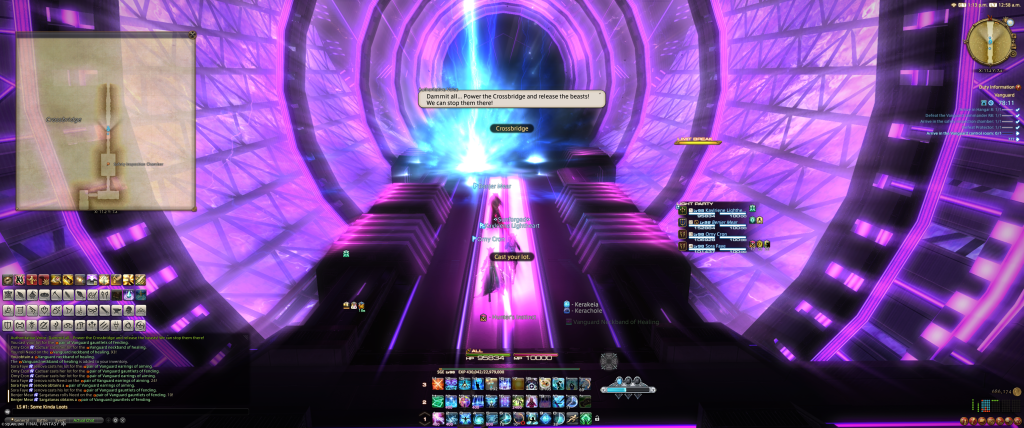
Generally, the rule is this – if you liked how your job played in Endwalker, there’s not much to object to on the table in Dawntrail, unless you’re a Black Mage or you really enjoyed fishing on Redraws as Astrologian (also RIP Plunge, Dark Knights). If you think everything is homogenized trash, you’re still gonna feel that way, and if you have a job you like, it’s probably still gonna feel good to play for you. What matters is the encounter design in FFXIV, and how things are shaped around that gameplay, and well, maybe good news!
Encounter Design Is Notably Improved
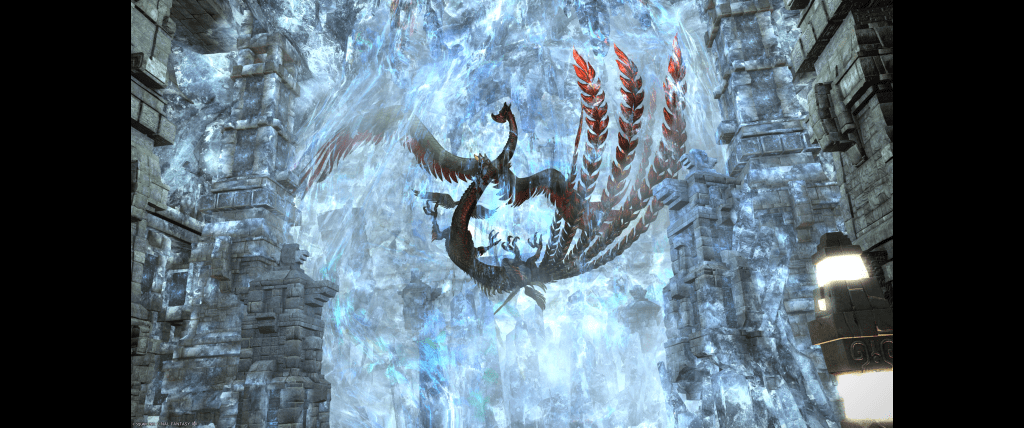
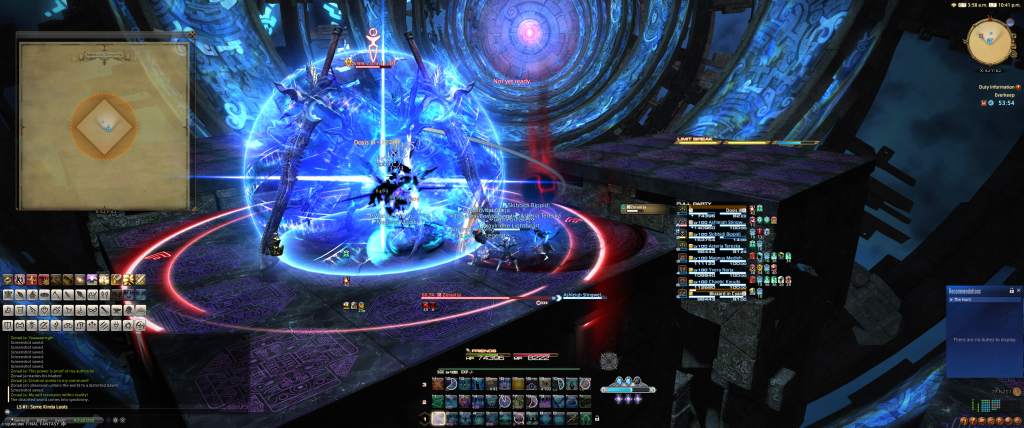
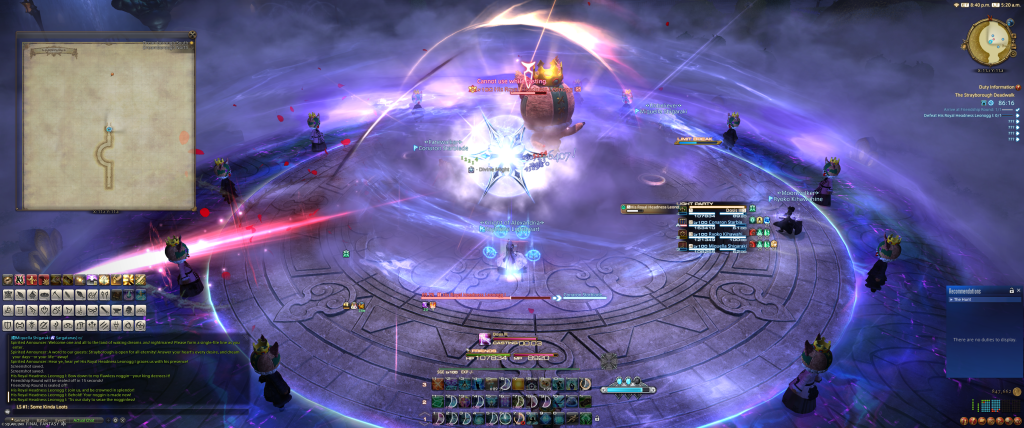
I’m gonna be real – outside of Savage and EX, Endwalker was kind of dull and non-threatening in most instanced content. Not quite boring, but past a first run, any job you can play to reasonable competency would get the job done without a worry. So far in Dawntrail, it feels like the development team gets the issue at least a bit, and while the early dungeons are still pretty similar in terms of gameplay engagement, there is a notable step up in overall complexity and need to play to a reasonable skill level. The first trial at level 93 does a good job of showing the change as it starts, but then the 95 dungeon and beyond really step into a much more interesting and engaging level of mechanical complexity for the Normal content. In the two available EX trials, the design is outstanding and feels like the team is trying to find a happy medium between heavily scripted encounters and degrees of randomness to add some spice, and it is very nice. The level 100 dungeons that comprise the Expert roulette this time out are also suitably engaging with interesting mechanics and more potential one-shots that require you to pay a modicum of attention. This is also true of the level 99 trial and the story capstone trial, both of which have a much higher degree of stuff going on compared to the same in Endwalker, where neither Hydaelyn nor Endsinger posed much in the way of actual threats, provided at least a tank and healer could live to allow for recovery.
Of course, we still have the Arcadion raid series set to begin with Normal in a week and Savage two more after, but the early signs are promising. So while job design is a bit hit or miss and not a huge step away from the Endwalker designs, the encounter design in mainline content is a big differentiator, and that is, in my opinion, a huge positive.
The Graphics Update Rules
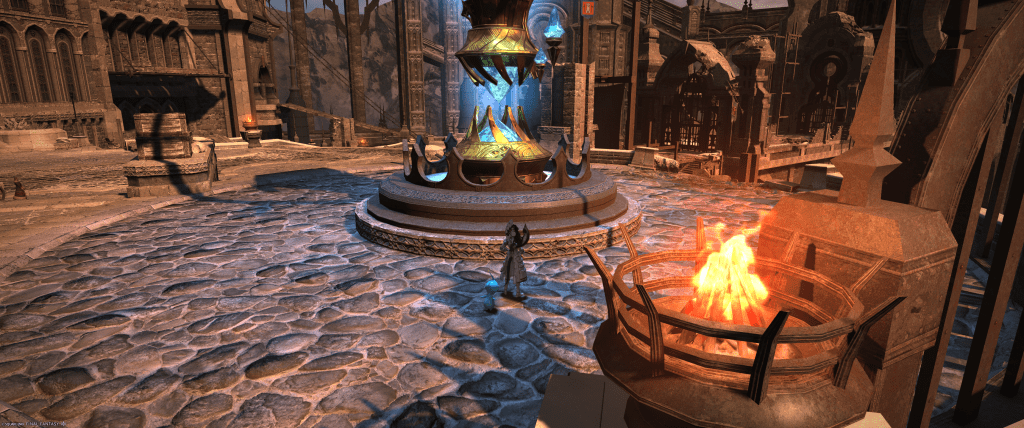
The first major engine update for Final Fantasy XIV is a sticker feature of Dawntrail, and it delivers in spades. In the expansion areas, made for this detail from day one, the uplift is obvious – far more lush, with notable improvements to bump and normal mapping, lighting, and especially improved effects like fog. However, even in older areas, the difference is profound – so many of the game’s library of textures have been updated for a new physically-based rendering model and show impressive improvements in resolution, light interaction, and realism while fitting the game’s overall aesthetic. Gone are the days of shimmery everything and blocky, low-res textures made to accommodate the PlayStation 3 and its 256 MB VRAM. What’s more, this level of detail is not excessively demanding on hardware, requiring only a modest specification bump and running quite well on most hardware that could already run the game. Improvements to animations smooth out character movement and create a more fluid and visually pleasing combat landscape, and the addition of modern upscaling techniques (albeit implemented somewhat poorly, especially Nvidia’s DLSS here) allow players to squeeze some more performance out of the game at a relatively low cost to visual fidelity.

My only complaint so far is that of all the places to use poorly-maintained gear, putting it on an expansion-vital character with closeups in the new cutscenes was an awful idea. Koana is hard to take seriously when he appears because his gear is incredibly pixelated and low quality compared to everyone around him, and it feels like some time in the kitchen to make a custom version of his outfit (which is obviously a reused armor asset) would have gone a long way. There’s relatively few pieces of gear with that gap in fidelity, but they picked exactly the worst combo for poor Koana!
New Jobs Do New Things
The two new jobs, Viper and Pictomancer, have unique gameplay loops they get to mess with. Viper has a two-button baseline combo that modifies by step, with a debuff and two buffs to maintain through correct execution of the combo, and while the positional requirements flow from this, it at least has an easy way to note which is required at a given moment – yellow is for flank positionals and red is for rear, and this color coordinates with the base action button you will bind (the big oGCD combo is kind of a mess, though!). Pictomancer revolves around preparation, requiring that a player prep their motifs prior to a fight (where they are instant cast) for maximum DPS, creating creature motifs for big spells, a hammer motif for instant-cast movement capability, and then rotating between additive and subtractive color palettes to cast a 1-2-3 combo of filler that expands to a finisher, not too dissimilar from Red Mage in a manner of thinking. Both require a certain amount of thinking about how you bind and set your hotbars and track your buffs and prep stuff, but a lot of that confusion begins to melt away with some modest effort at playing them. I’ve been playing a small bit of Viper and plan to eventually do the same for Pictomancer, but both seem to be interesting new additions that have their own unique quirks.
The Formula Of Final Fantasy XIV Is Fundamental
Dawntrail is, outside of these things, a by-the-book FFXIV expansion. How many zones do you get? Six, including one full secret zone and one that’s sort of mysterious. How many cities? Two, one with crafting, gathering, and market facilities, the other with tomestone vendors ready to sell you the gear you’ll wear to push your progress in the challenges to come. Rewards match to Endwalker so well that I could slap a 9 (or 10 for max level stuff) over the 8/9 of Endwalker and have things be accurate save for item level of rewards, although the weapon and accessory trials for Extreme traded places this time. When the raid tier comes out, I fully expect 4 individual instanced encounters, and I expect the fourth boss to be a two-phase fight on Savage with a door boss that makes a checkpoint. There’s a marketplace story quest for crafters and gatherers, levequests for them too, each zone has a bicolor gemstone vendor that sells the exact same rewards as ever for a currency that’s existed since Shadowbringers, and there is a new four-rank extension to the Hunt that includes a weekly elite mark and daily bills you can pick up and do. I expect we’ll end up with three Allied Society (nee Tribal nee Beast Tribe) quests, 12 total raid fights, and the level 100 trial will get an EX in 7.1 followed by a trial series with optional fights in 7.2, 7.4, and 7.5, while 7.3 will have an MSQ-required trial that concludes the Dawntrail saga in full. The predictable nature of things can sound bad (I hear it in my description too!) but it is a good formula that tends to work, and it, overall, works here as well.
So far gameplay-wise, I’ve really enjoyed Dawntrail, but I am also a full adherent to the formula. There’s one thing I think it could improve on though…
Dawntrail Is Lousy About Letting You Play Your Character
FFXIV is a story-driven game, and I get that. I love that about it, but sometimes it is too much. At times, it feels less like an MMO and more like a visual novel, and it can be hours, sometimes literally multiple hours, before the game lets you do anything more with your character than move between NPCs and locations to trigger cutscenes. The early part of Dawntrail is remarkably bad at this – I think I barely fought 10 enemies to progress the MSQ for 3 levels outside of dungeons, and while Endwalker broke this up with a higher memorable number of solo duties including role-playing as other characters, Dawntrail feels as though it has fewer of those too (I think the feedback to In From The Cold scared the development team). I find this bothersome because I think that FFXIV has genuinely fun combat design and I sure wish I got to do more of it during the MSQ! It makes it hard to get into at times, but at least in newer expansions, there’s more voice acting so the performances can carry…but Dawntrail also, overall, feels like it has less voice acting than Endwalker did. This drags down the early part of the MSQ and creates the feeling of a slog as you push to get through the content on offer, which is a disservice to that content because the story is pretty good in my opinion but bogged down by this manner of presentation. I’d love to see the core MSQ experience broken up a bit more with combat outside of dungeons, a few more solo duties, and a smidge more voice acting – just to feel at parity with Endwalker and Shadowbringers, at least!

But about that MSQ…let’s discuss. Spoilers to follow, obviously!
A Tale of Two Stories
Dawntrail, much like Endwalker, Shadowbringers, and Stormblood before it, is really a tale of two intertwined narratives. Stormblood was obvious about this, it was the tale of two nations and their liberation from the Garlean Empire. Shadowbringers tucked that fact into its story, letting it slowly peek out before it bopped you on the nose that it’s actually the Ascian origin story (and a deep essay about what it means to carry grief). Endwalker starts off about towers and winds towards the final days, but becomes a meditation on suffering told through the lens of the Ancients, in a way that ties back into the Final Days more directly.
So what is the intertwined narrative here?
Well, it’s a doozy – nothing lasts forever.
The rite of succession itself acknowledges that no king, no ruler can sit the throne for eternity. Transition happens, change is inevitable. A big, scary part of life is accepting this at every level – that some day, you will wake up and the possibility of seeing certain people will not exist anymore. Your parents, a friend, a celebrity – everyone dies eventually, and we don’t get a whole lot of agency over that. The only real sense of control we can have over any of that is to live our best lives – both in terms of physical health, but also emotional health – seeing the people we want to see, spending our time in a way we won’t come to regret, acting when we have the chance to do something because that chance can fade just like that – it’s a real substantive lesson in life.
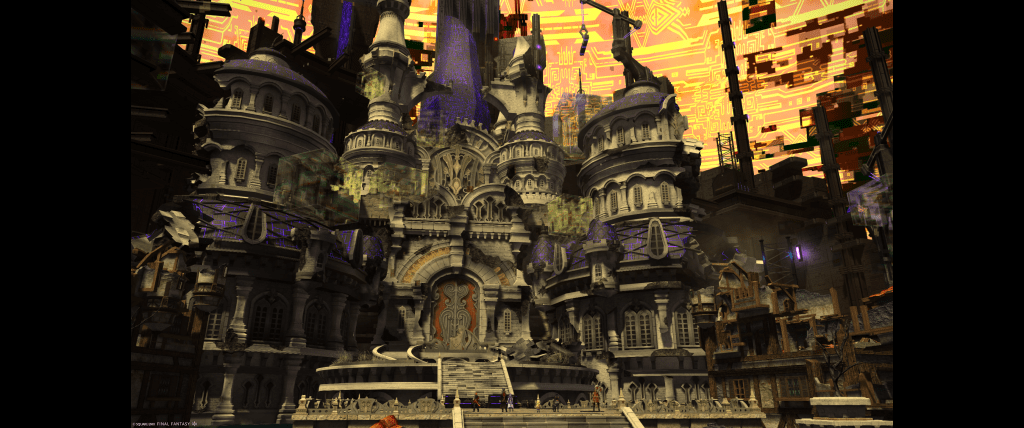
The succession story is a tale of what acknowledging this can look like done well. Gulool Ja Ja knows his time isn’t forever, and he can feel that time pushing down on him. He founded a great nation and wanted to find a way to continue that, but didn’t have a candidate worthy at the moment – so the plan is to forge one in the fires of trial, refusing those who fail to meet the challenge. He’s thought about what his end looks like and how he can care for those he cares about, to ensure that his legacy lives on but finds its own way through a new leader who meets his challenge.
The Yok Huy are another aspect of that idea, where their culture is structured around the idea of remembering those who died, such that they might live on in the hearts and minds of the people. Their practice of having gravestones for people who still live, gravestones with stories and deeds engraved upon them, it feels sort of ominous, but it reflects the cultural significance of processing death and understanding how your society lived and died, knowing the people who did great deeds and keeping them close to heart.
And then the core thrust of the second-half, the people of Alexandria, Queen Sphene, and her Endless, show us a bad way to handle the idea of death. The Alexandrians push death down into a non-entity, by creating a hellscape market to allow people to buy souls harvested from others, and by erasing the memory of the dead from the people, uploading their memories to a recreated facsimile of life that is hollow and empty like an amusement park (quite literally). Alexandria’s core notion empowers the fear of death by creating a currency system that allows you to count down to your eventual demise and also trivializes death by making such a currency and entertaining the people with the practice of gladiatorial combat (and I hope the raid series addresses this in more detail since it is that very arena). Sphene is, rather intentionally, the opposite of Gulool Ja Ja where it concerns the main story theme, not only refusing to die (well, in the sense that she goes away as an entity) but also refusing to give up rule of her people. She’s well-loved and this isn’t opposed by her people (who maybe don’t know she’s a system based on the original Queen Sphene, but hey), but the contrast is pretty clear!

Gulool Ja Ja respects death and prepares to allow his people to stay whole. The Yok Huy honor their dead and keep their memories alive in their minds, while acknowledging the sting of death. The Alexandrians shun death and seek to reduce and remove it by controlling it through sustaining life artificially and also giving the dead a place they can inhabit, regardless of the cost. Nothing lasts forever, and how each person and entity in the story handles that information drives the plot forward in Dawntrail.
The other major theme component of the story is the concept of family. Tural is a collection of mashed-together races that have come to a mutual agreement that they can and should live in the same places and explores what conflicts that might drive, and we see this theme consistently throughout the story. Gulool Ja Ja adopts both Wuk Lamat and Koana, taking them into his family, and in turn they take him into their hearts and respect the role he has played in their lives. Hunmu Rruk gave up Wuk Lamat and he has to come to terms with how she might see him for it. The Scions are a strange sort of family and the challenges they faced together lead them into this new phase, on opposite sides though they might be (we’ll discuss that later). Zoraal Ja is Gulool Ja Ja’s only biological son, yet he feels the most detached and disconnected from him, feeling that he has been left with nothing and thus cannot in turn pass a legacy down to his own son, Gulool Ja, and this hurts them both.

The entire story, in sometimes heavy-handed fashion, hits on the theme of family – largely found family as our cast assembles together and strengthens their bonds, but also blood family and the concept of the duty we bear to others around us. Wuk Lamat’s main avenue to complete the trial of the Dawnservant is to integrate with the people of Tural, to understand how they came to be ruled from the throne of Tulliyollal and the struggles they still face. Sphene, for her faults and flaws, wants to know her people better and seeks much the same as Wuk Lamat – which, well, is more of a construct than the story first lets on, but it lands just as genuinely and feels authentic enough to me. Krile’s whole journey is motivated by the understanding that her grandfather journeyed in Tural and even found the Golden City, and what she learns on this search for familial history gives her more than she ever could have imagined – her parents, in fact, for a brief and fleeting moment. Tural is haunted by the ghosts of legacy in nearly every facet – the Tulliyolal Saga that lines the western path of the grand city, the gravesites and monuments of the Yok Huy, all the way to the twisted emptiness of Living Memory – these places all represent the role of family, death, and remembrance in our tales. Two expansions ago, Emet-Selch bade us to remember the Ancients, and after ruminating throughout Endwalker on what the role of remembering is, Dawntrail relates back to it by showing the ways in which we can remember those who’ve left us behind and what they brought to us in that short window of life.
One reason I think I am more positive on the Dawntrail story than a lot of opinions I’ve seen so far is that the expansion is nothing if not consistent about these themes. It understands how these elements feed into the narrative and it goes to great lengths to keep them front and center. Those themes are poignant and beautiful, and they dovetail nicely with the arc of story we’ve been on since Shadowbringers. Shadowbringers was, in many ways, a meditation on grief and what it does to us, Endwalker was the analysis of the role that sorrow and despair have in providing us with a full range of lived experiences and how the contrast of darkness and light brings greater joy to us, and Dawntrail aims to address the bonds between us and what happens when we die – and taken in this way, it is pretty powerful. Nothing in Dawntrail made me as openly weepy as the (admittedly somewhat hackneyed) finale of Ultima Thule in Endwalker, but Living Memory and the Alexandrians made me contemplate some tough life questions. We will put a pin in that for now to discuss some individual plot elements that have met with both praise and criticism and my take on them.
On Wuk Lamat
Wuk Lamat as a character has proven to be…contentious.
She’s a new addition that literally came into the game in the eleventh hour of Endwalker’s patch cycle and immediately became the main non-player protagonist. Absent any editorial, that is a recipe in a decade-plus narrative that leads to a mixed opinion unless you absolutely slam-dunk this character. Did the writing staff on FFXIV pull it off?
Well…maybe not.
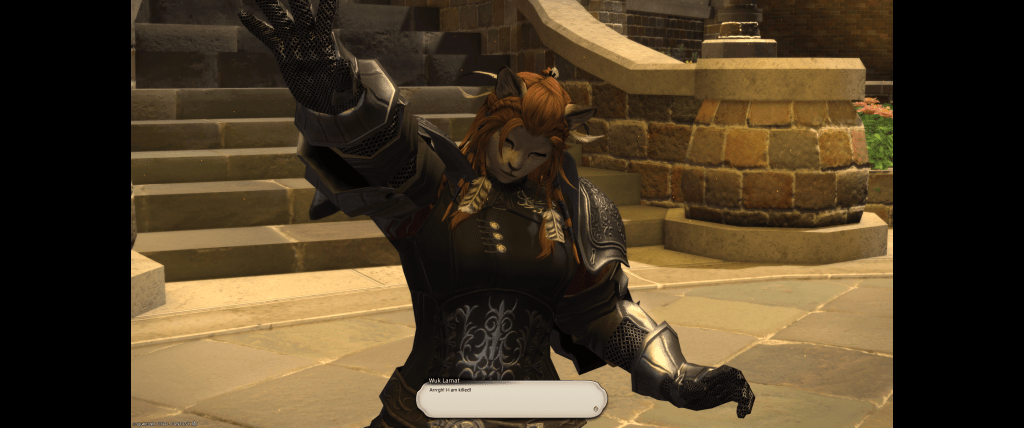
My personal take is this – Wuk Lamat starts off very annoying to a point. She speaks like a bad shonen anime protagonist (she’s Naruto and I dislike Naruto), constantly stating her own name out loud alongside proclamations of her goals and philosophy on life. If I had a nickel for every time Wuk Lamat proudly, out loud, told us she would be the Dawnservant, I could probably buy a soft drink at the grocery store (maybe even some cheap booze). It’s the kind of thing that could be endearing if played with in small doses, but there is just a lot of it here in Dawntrail and it’s tough to overlook. But that’s also the point, I think – Wuk Lamat is purposefully on the character arc of unprepared new ruler, and the presentation of her inexperience, fear, and ineptitude are intentional ways of giving her a character arc throughout the expansion. When viewed in this way, I still think Wuk Lamat is a bit iffy as a character, but I came to like her at least a bit by the credits roll. She’s not my favorite character in the game nor even really close, but her development through the story does a lot to redeem the early impression she gives as we adventure into Tural.
One thing that also must be said when discussing Wuk Lamat is that how you view her largely depends on the language you listen to the game in. Most versions of Wuk Lamat are fine, and while I think the English performance of her voice given by Sena Bryer is good, it does fall down in places, notably when Wuk Lamat is supposed to be angry or yelling, where those modes of speech fall a bit flat and quieter than they ought to be – and this would be fine if one of those performances was not a signature part of the final story trial. I don’t think this is entirely Bryer’s fault, but it seems a gap in voice direction that is rare in this game. To an extent, all of the new, largely North American-based VAs, have some version of this problem, where their line delivery is a bit flat and uninspired, which is especially noticeable in the limited voice-acted cutscenes we get in Shaaloani. The type of absolute cretin that spends too much time discussing other people’s lives also hates Wuk Lamat in English since she is voiced by a trans person, and the transphobes should absolutely fuck off – their critique is based solely in that grounding and is invalid. The UK/EU-based cast we’ve grown to know and love remain about as sharp as ever, although Alphinaud sounds a bit bassier in English this time around, Thancred and Y’shtola’s VAs have microphone or audio balancing issues that make them sound noticeably louder (Thancred) or somewhat muffled and distant (Y’shtola), and Alisaie is (thankfully) far less of a quip machine. But we should talk about the Scions in their own section…
On The Scion “Conflict” and The Story of Dawntrail
One of the certified hype lines about Dawntrail from each fan festival was that the Scions of the Seventh Dawn, freshly disbanded as far as the public knows, would be in chaos due to conflict in the ranks. What was the issue and how big was it?
It’s non-existent, I’m not even doing a cutesy transition flourish in my writing for that.
In literally one case (the level 91 dungeon Ihuykatumu), the opposing Scions (Team Dad, Thancred and Urianger) do one thing that gives us a slight disadvantage. They are against us because they are aligned with…Koana, Wuk Lamat’s adopted brother who she gets along with well! There is literally no conflict between them except on the surface, and it is quickly revealed to be a farce.
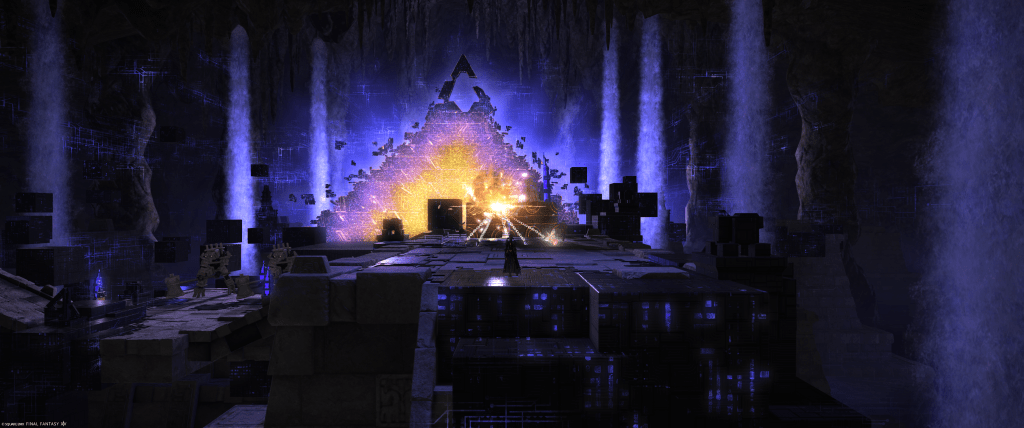
As for the role the Scions play, you may be excited or disappointed depending on how you feel about them. If you love the Scions, the good news is that by the end of the Dawntrail story, the whole gang is back together to use their combined expertise against Sphene and to understand the implications of the things she’s done, many of which relate directly to plot threads we’ve been swatting at for years. If you hate the Scions, well, nowhere in Dawntrail is really safe for that, because you’re still with a bunch of them to start and it’s barely a level of MSQ leveling and maybe 5-10 hours tops into the game before Urianger and Thancred are just kinda there most of the time anyways, which only leaves out Y’shtola and G’raha Tia for the midpoint turn, which is likely to elicit a similarly polarized response to the rest of this section! They do have a slightly reduced presence, which is funny in a bad way because when the Scions converge together at a moment in the story, you know either a trial or dungeon is coming up, because Duty Support needs the characters there and so ah-ha – they appear! That being said, the Scions are kind of not the point, and neither is another major character in FFXIV…
You Are (Not) The Main Character in Dawntrail
For the last several FFXIV expansions, the story has largely revolved around us as the player, the Warrior of Light (and that one stint of Darkness). The player character has been the protagonist, the immediately-identified main threat for the villains, and what the Scions and other supporting cast do is portray how awesome and powerful you, individually are. Don’t know why so many people play the game when I’m the main character!
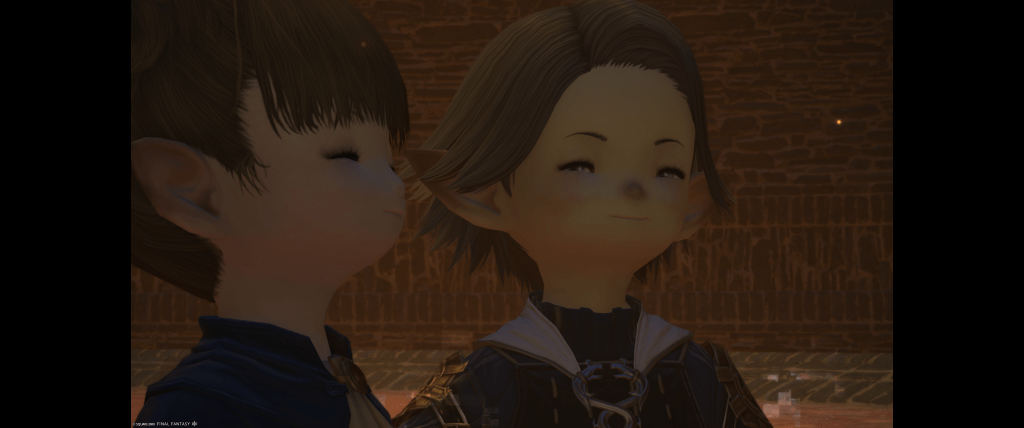
In Dawntrail, this is pushed into the Stormblood territory, where not only are we not the main characters, but cinematics and cutscenes spend more time on Wuk Lamat than us. Dawntrail is, make zero mistakes about it, Wuk Lamat’s story, one we are all here to enjoy as the passenger princess. Another major component of the Wuk hate I see online boils down to this – for a not-insignificant part of the FFXIV playerbase, the point of the game is to be a well-written narrative about how fucking awesome my little guy I made in the character creator is. That Dawntrail veers away from this means that this portion of the audience, whose tastes have been heavily emphasized the last two expansions, is left wanting, and they take that out in some ways towards the character in the narrative that has firmly taken that from them – Wuk Lamat.
For me, this is kind of a mixed bag. Ultimately, yes, Dawntrail is the Wuk Lamat story, and I like the overall shape of that story and how it ties back to the larger themes in play. The characters that do take the stage are compressed in role and importance compared to the usual ensemble-style, and I think it leads to the changes we see in some characters – the more assertive Krile, the less-cliche Alisaie, and the sure-footed Alphinaud. It also lets us take a moment to expand the cast by bringing Erenville in more and making room for the arc-specific characters like Bakool Ja Ja, Ser Otis Velona, and Cahciua.
But also, I think that us being more off to the side is intentional in a positive way, as it lends the whole game the sort of summer vacation vibe that we all joked about knowing it wouldn’t last. Our characters are just cruising with this new friend, her friends, and her enemies, because we just got done saving the star and creating a path forward to restoration for the Thirteenth, so even when we might more proactively jump in, like with Sphene, we kinda let things cook for a minute. It’s telling to me that the trials this expansion, when compared to Endwalker, make far less use of the Azem crystal as a mechanic, and that feels purposefully story-driven. We seek challenge for challenge’s sake and that allows things to happen that we otherwise would not let happen! We fight Valigarmanda and Zoraal Ja both, canonically, with the full cast (with Duty Support available too!) – no other reflections or summons, just a full group of the cast who is there in that moment. It is telling and interesting that we only finally use the Azem stone on the final trial, as if signaling that we understand the threat Sphene poses and that our vacation has, in that moment, fully ended. For much of the story this expansion, we’re the stoic adventurer, not celebrities or saviors, and so we adventure the land and intervene when it aligns with our values. This is, to my mind, a good thing – it fits what we were promised and then swerved from in 6.1!
I get why it is jarring to some people, and I understand that it won’t be to everyone’s taste – but I believe it serves a grander narrative purpose and keeps things from being so focused on us that no one else can move the story forward. It’s fun to see our character in the tutor role instead, moving the plot forward without being the lynchpin upon which everything is hinged. That tutor role, however, is not perfectly executed, and it does mean that at times we’re more just passively sitting back then proactively still helping things along, and that kinda isn’t great.
On Sphene, Alexandria, and the Final Act Sudden Villain
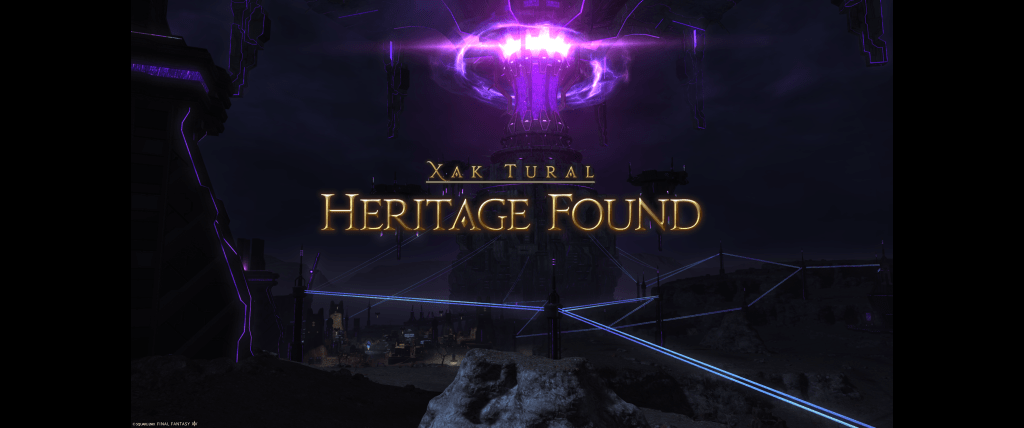
Two expansions in a row now, the main and actual villain of the story has emerged around the 7th level of the 10 in an expansion as a new character who introduces a new concept, ties together some existing lore, and then gets a lot of screentime in a short window to establish their threat. In both cases now, these characters are cut from the same cloth – younger women with power that makes them a threat and a worldview that creates the impetus for us to challenge them. In Meteion’s case, she was an emotionally understanding creation given a false viewpoint on sorrow by her creator, and in Sphene’s case, she’s an artificial construct of a once-living ruler who seeks to uphold a primary goal even as it creates a moral and ethical nightmare. We convince them both, in some ways, that their goal was misguided, and when we set our strength against theirs, we win, in both cases, in a domain fully controlled by them.
The entire last arc of Dawntrail is intended to be a love letter to Final Fantasy IX (and to potentially drum up interest in that oft-rumored remake of it!), and in so doing it has some weirdness around it. The idea of a reflection suffering a Calamity and persisting, finding a way to use it to empower them, and then fusing to another reflection (or the Source, as the case is) is a pretty cool concept and one that obviously opens up the ongoing plot thread around Y’shtola seeking fervently to find a way to the First, which also creates a contrast between the Voidgates of the Thirteenth (inelegant tears in the aetherial bonds between worlds) by giving us a comparison (fused, crafted gateways between worlds that are functionally seamless). The whole of Heritage Found, Solution Nine, and Living Memory are all designed to tell a story of just how long Alexandria persisted under the conditions of the levin calamity visited upon them, with the proper Alexandria areas being medieval and old architecture (all pulled straight from Final Fantasy IX!) while Living Memory’s main areas and the contrast of the Electrope-infused areas and Solution Nine with that older architecture portray the story of how Sphene’s reign evolved from benevolent human ruler to artificial creation designed to maintain order while working towards the goal of preserving Alexandrian life over all others.
The contrast in designs is pretty sharp and a neat concept, although it is somewhat jarring at first, as it seems to be intended to be. Sphene is often accompanied by the blaring PS1-original FFIX music, a noticed shift between Soken and the music team’s modern work and the classical MIDI-style flair of those PS1 classic Final Fantasy titles, and many of the character parallels are modernized and story-appropriate takes on characters from FFIX (the use of beast souls is very similar to Trance from FFIX, the Viper job in general plays closely to Zidane’s archetype in IX, Ser Otis Velona is a bumbling and kind-hearted knight not too dissimilar from Steiner, albeit in a robot casing) and there are some cheeky references made throughout the final stretch of the MSQ (an aether current quest in Living Memory references the Iifa Tree, the botanical area of the zone contains the Cleyra museum, there are multiple references to enemy kingdom Lindblum).
I’m of two minds about all of this.
On the one hand, I never really played much of FFIX – I like the idea and what I have played, but I just never found the time to get it done, and so the references are fine for me but also ring sort of like the FFIV stuff from Endwalker – it doesn’t really quite hit for me because I don’t have the nostalgia in that way. It does seem, at times, like the team had two competing cool ideas (FFIX homage and super-techno futuristic society) and pulled a Garlemald from Endwalker, fusing them into one story arc where it feels like both could be expanded upon better separately and we fail to thoroughly explore both plot beats as a result. Granted, unlike Garlemald, I don’t know that we would have gotten a set of two great separated stories had these ideas been split, and also, I think it works better here because it creates a sense of evolution and change in this new society we get introduced to rather suddenly at the end – we see their history as a very real set of artifacts we can explore in full. But I feel like this segment of the story also suffers because we get introduced to it so late into MSQ that there’s just not enough time to let it breathe, and it also carries with it a consequence of shortening our exploration of Shaaloani, whose MSQ chain exists almost completely to give us a narrative breather (and set up some plot devices) before suddenly, wham – THUNDERDOME – and we head into the neon future of the final stretch of MSQ. I liked Shaaloani (short of the NA-based voice acting direction for the new cast here) and so I found this modestly disappointing, because they touch upon some of the cultural signifiers we’ve heard about throughout the story only to cut them short to move into Alexandria and the full heel-turn of Zoraal Ja.
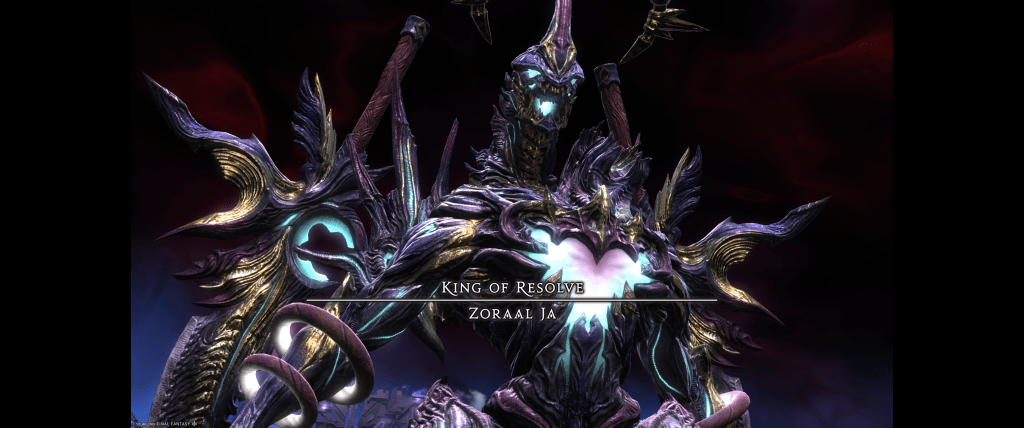
So, I guess where I land is this – I like Sphene overall, because unlike with Meteion, she has a ominous aura about her immediately when you meet her and her character arc is an interesting exploration of a modern theme (it’s hard not to see Sphene’s villain arc as a look at how AI tech and algorithms often make mistakes because of following a programmatic approach to a human idea or problem and how they’re literally burning the planet alive!), I like the idea of Alexandria and how they made it both fit the FFIX reference while also showing an FFXIV-specific twist and relating it to the main plot, but I also think there is something that could have been potentially gained by splitting the future society vibes off from the old and comfortable nostalgia of FFIX’s Alexandria. Most FFIX fans I know personally have liked the inclusion and the modern 3D look at Alexandria and that world, but it feels much more like the Crystal Tower’s nod to FFIII than a proper nostalgia arc. And, to be clear, for me this is great, because I always say it’s a strength for XIV that it so often makes new original constructs that pay homage to older FF titles, instead of pulling them cleanly into XIV and going “look, see, the thing you like!” (cough, Endwalker post-patch MSQ), but I find myself wanting more of the transitional story between old Alexandria and the bright purple and pink lights of Everkeep. We’ll revisit that in a moment, though, as part of a larger point!
On Dawntrail Coming After Endwalker’s Narrative “Experiment”
I think a part of the weakness some people see in the MSQ of Dawntrail boils down to an understandable issue outside of those we’ve talked about, though. In the past, an expansion for FFXIV is not a blank slate – we have a post-credits scene in x.3, and the full breadth of x.4 and x.5 patches to explore the new story, build themes and characters, and setup the segue as smoothly as possible. While a lot of the fanbase has a distaste for Stormblood MSQ, the patch cycle that expansion was strong because after 4.3, we shifted into Shadowbringers hype mode, with the mystery of the souls being pulled across the rift and the strange headaches and visions giving us a tense series of MSQ quests and dungeons before we finally explore the First.
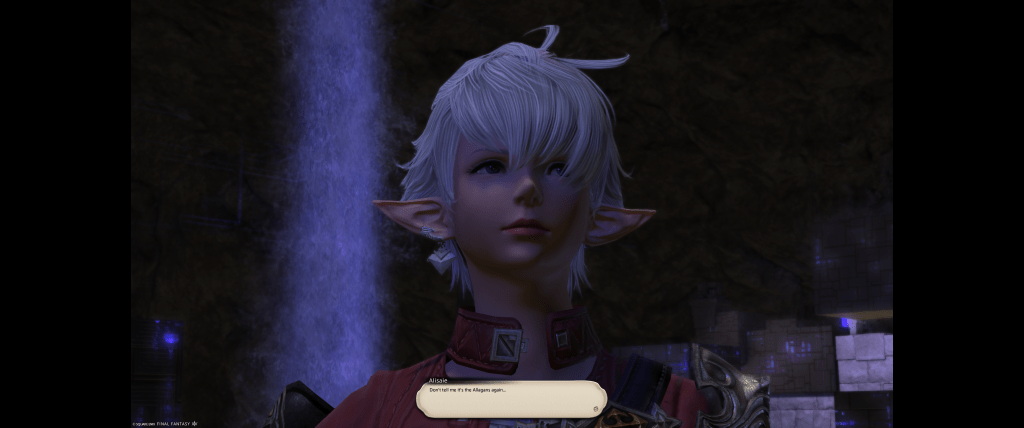
Dawntrail does not get to lean on that, though, because Endwalker’s full post-release MSQ was a standalone story, and Dawntrail got one minor patch, 6.55, to set the stage for what was to come. This created, in my mind, a lot of problems for the first-half of the MSQ in the expansion proper, because we had to spend a lot of time getting up to speed on Tural, Tuliyollal, the claimants, the rite of succession, and the people who make Tural their home. We got no real worldbuilding or setup in Endwalker patches, so we had to speedrun all of that to start the expansion MSQ, which, I think, is a big reason that part falls a little flat for many, myself included.
And sure, of course I’d say that, I’m on record as having not particularly loved the Endwalker post-release story content, so naturally I am going to take the opportunity to gently dunk on it again – but I do think that a big narrative strength in FFXIV’s past was having that setup and being able to establish the things to come so that we’re not struggling in leveling quests to comprehend the ideas on offer or needing to do silly cram-session quests where we get bombarded by new ideas. Dawntrail suffers for this gap.
I think the other side of that issue is worth exploring too, though, which is this – in Endwalker, that last MSQ quest in 6.0 had this weighty sense of finality to it because it was concluding the story arc and establishing a clean break to move into new lore. In Dawntrail, we get the standard FFXIV MSQ launch ending, which is that we banish an immediate threat but have a list of other things we have to deal with that sets a stage for the patch content and the proper full finale to Dawntrail the story in 7.3. Off the top of my head, we have the leadership succession of Alexandria to Gulool Ja, the history of the Alexandrians, what shard they come from, the nature of time movement within the thunderdome, the interdimensional fusion technology that allowed Alexandria to fuse to the Source, the artifact that was the key to this fusion reacting with an Azem symbol when we pull the crystal out for the story capstone trial, the political continuation of Tuliyollal after all that just happened, and I think the biggest plot point – the battle between Oblivion and Preservation, the two opposed factions of Alexandria that we see precious little of during the MSQ (they setup Cahciua and have an obviously immediate interest in Zoraal Ja, but the longer-term battle they fought against interdimensional fusion is barely touched upon., especially how it relates to Krile’s parents defecting to Oblivion from Preservation).
I think that Dawntrail’s early MSQ suffers a bit for the experiment that was Endwalker, because it just does not have a stable foundation to start and a part of the pacing issues in the first half boil down to needing to establish that sound footing. On the other side, I liked the ending and the open plot threads we still have, because it feels like there is a suitably large content base there to draw from and it raises my hopes for the traditionally-meh story content that x.1 and x.2 patches end up encumbered with.
But there’s one thing I said to put a pin into that I now want to revisit…
On Emotional Impact and The Last Zone of The Last Several Final Fantasy XIV Expansions
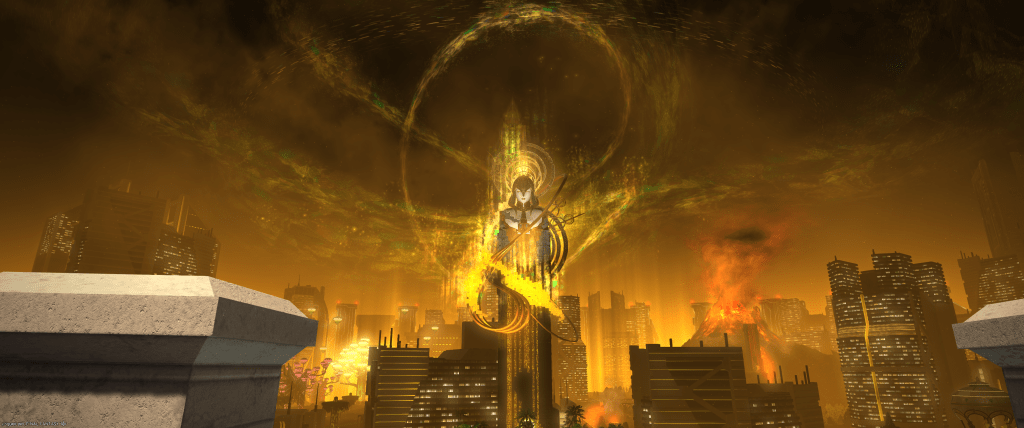
Ever since we had no secret zone in Stormblood, the FFXIV team has been dedicated to giving us not just a big secret at the end, but making it the biggest emotional gutpunch in the game each time. In Shadowbringers, the Tempest starts off innocently enough but gives way to Amaurot and the full extent of Emet Selch’s grief made clear – he was a man consumed by guilt, rage, and sadness over the loss of his people, of his civilization, and it led him down a dark path, one which allowed us to explore his sorrow as a loving recreation of the things he held most dear. In Endwalker, Ultima Thule is an entire zone about peoples who have given up in the face of sorrow and despair, and which aims to make us do the same by taking our party away piece by piece until we’re left with the shades of memory on the final stretch of that journey, their voices and many others echoing in our minds as we climb in spite of the suffering to face Meteion in a clash of ideals. In Dawntrail, we enter the city of gold…which, as it happens, is a loving recreation of Alexandria’s best places for the memories of the dead to inhabit. It’s a strikingly beautiful place in the MSQ…but it’s hollow. The story tells us this, and if you explore just a little, you can see it for yourself – the facades of Canal Town in particular having empty space inhabited by fiends behind them. It’s a false paradise, a twisted and distorted shrine of the dead, and an aberration (what it says that the first time broccoli is a harvestable food item in FFXIV happens in a haunted hollow space is a curiosity, but hey).
We are made to realize this nearly immediately through Cahciua, and then we do something that’s kind of poignant and thematically appropriate, that ties the whole thing together – we, piece by piece, shut down the whole zone. The music turns off, eventually being replaced by a hollow and echoing haunted version of it, the color drains from the buildings as the only life that remains are the golden sparkles of memories and the verdant green plant life. In each region, a different character is made to shut down the district to tie a bow on their story and plot growth – Wuk Lamat banishing the memory of her mother figure Namikka and banishing the specter of our knight friend Ser Otis Velona (miss you friend), Krile turning off the memory of the parents she only just now met, and then finally Erenville, shutting off the memory sustaining his mother’s haunting existence. It is ludonarratively heavy, and it feels like a gamble in style – Amaurot was cool, Ultima Thule grew and flourished as we went through our mission there, but Living Memory dies, and we, quite purposefully, kill it. Every single time we turn off a region, the game pops up to ask us if we’re sure, and tells us there’s no going back, and sure enough – the zone that persists for max level gameplay like Hunts, FATEs, and gathering is the empty shell version, drained of life with only fiends to wander and with the gold of the golden city very much gone.
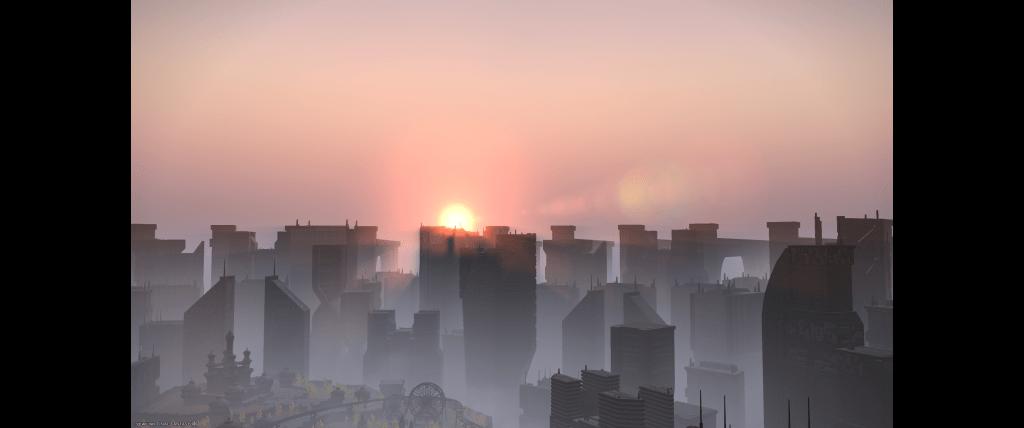
I can see why this zone might have not landed with people, and at first I was kind of feeling that same way. Ultima Thule lifts you up as you go, with each sacrifice meaning something and enhancing the zone, but in Living Memory, the acceptance of death in each area, tied as closely as most of them are to the character arcs we’ve been seeing for the last several dozen hours, darkens the environment and the mood. Ultima Thule was about communicating that theme of Endwalker – embracing the role of sorrow as a constant companion and enhancement of joy – and the music gets more interesting and the zone more colorful and varied as we go. Living Memory is the exact opposite of this.
But as I sat finishing the zone in the wee hours of that Monday morning, the themes of the story hit me like a brick, especially Krile’s scenes. I think we all fear and tremble at the idea of death because it is this big, unknowable, unavoidable thing we all have to contend with. One day, all of us will die, and we will see many people we love and care about die right before our eyes before it is our turn to do the same, and what we are left with in that process is the memories we have and the ways we choose to honor them. Living Memory cannot be allowed to stand because it perverts the process, creating shades that represent but a fraction of the person that lived. Still, though, the scenes hit me in a way that resonated.
I lost my father when I was 11 years old, and I lost my maternal grandma this year in March. Both are a part of some very good and formative memories for me, but with my dad in particular, I have always, daily, without fail for nearly 30 years now, wondered what our relationship would look like were he still alive, wondered what he would think of my life and the path I have chosen. There have been many moments where I’ve longed, more than anything, for him to be there for the moments in my life that really mattered to me – for my wedding, my professional accomplishments and personal triumphs, or even to have him there when things were less than ideal. I’ve often wondered if we would butt heads or dislike each other, or if our relationship would be arms length at best, as it is, I probably shouldn’t admit this online, with my mother. But mostly I’ve just often wanted him to be here and to be present, to get the years we never got to have.
But ultimately, I can’t have that, and any ability to get something like it would carry a cost. Had he lived to today, he would be in his 90s, a tough age to be in almost every circumstance. The cost in medical bills and effort to sustain his life for that long around the health issues he carried would be too high, not to mention the impact on an already-precarious quality of life for a 90 year old man. I don’t get to have the person himself around, and that’s something I’ve grappled with (often unsuccessfully) for nearly 30 full years now, but I do get to have the memories of the time we did get together. As I’ve gotten older, the larger weight of that burden has been the loss of memories with him, where they happened so long ago that I can only remember the vaguest overall sense of the time I got with him, where the memory of him is a blur of childhood nostalgia tied to small and very specific moments I can recall in full. If there was a way to preserve those memories, god would I love it. But a part of accepting death is also moving forward, of living life knowing that loss and the difficulties it can and does bring (for example, I have 3 half-brothers I’ve never met whose names I don’t even know that he had with his first wife and I have no familial connections to his side of the family since I just never got the chance to meet them and have contact info before he passed, and given their ages when I was young and my dad was alive, there is a high probability that at least one of them is also likely dead and that is a big info dump and thought I just dropped in this post I am so sorry).
Dawntrail’s finale stretch asks us to consider a question about existence – are people souls, are they memories, are they a composite of these things, and depending on where you land – is ending the existence of these memory-only husks really a death, or are they already dead? The game has its mind made up, quite obviously – but I think that some of the reaction I’ve seen boils down simply to the idea that turning off the lights in Living Memory is akin to a mass murder, even a genocide, denying that existence to potentially millions of dead Alexandrians. The game’s viewpoint is that their existence isn’t life, and that even were it, sustaining it requires an exponentially-increasing number of dead that would be unsustainable (and already currently is, which is explicitly a part of the text). The game sets this up early through the Yok Huy as a theme and then really hammers on it in that last zone, and while I have seen a lot of negative discussion, for me I think it was a decent reinforcing theme to explore.
While many moments of the finale-stretch in Endwalker had me weeping or stifling tears, the most I got here was a bit watery during Living Memory and its last moments of each region. I think we all ponder how we might handle the death of those close to us and how it would affect us, and many of us know the sting. It’s seasoned with levity in Dawntrail – the play with Otis, the awkward first meeting of Krile and her parents not knowing where to start or even how to start after a lifetime apart not knowing each other, but it’s human and touching in its own way. What made me water up a bit was thinking about the idea of what I might say if I had a chance to see my dad one last time, or my grandma, wondering aloud about how such a meeting might even go, because it’s not a thing I try to think about in daily life, you know? I think about what costs and tolls I would be willing to pay to get that chance…only to realize, as the text is telling me, that a part of death is accepting that life is imperfect as it is and all you can do is “take it slow and take a bite.” Most of us are going to die with words unspoken, feelings unshared and unrequited, and that’s just how life goes. Krile accepts that her parents had to make a hard choice and that she can live as her own person, raised well by Galuf in their absence. Wuk Lamat is Dawnservant, and she is thankful to Namikka for the role she played in raising her to be the kind of person that could do that. Otis lived and died in service of his kingdom and fulfilled his duty well, bearing no responsibility for the horrors that kingdom would later go on to attempt. Erenville and Cahciua is difficult, because I could feel my childhood angst over my father’s death stewing in much the same way as Erenville – I lived and did these things because you motivated me to, so how you can go and leave now? It’s a tough stretch to see Erenville, because he says almost nothing but through that communicates so much, and I felt that anguish as someone who has been through the loss of a parent. When he finally bursts, it means something, because he’s so stoic and at length for much of the story that when he opens up, you can feel his pain far more profoundly. He has to accept it, has to work through it, to hear his mother’s last wish, and then he has to shut off the apparition bearing her memories. The act of pulling the trigger gets weightier each time (well, maybe save for Otis who is second in line, but I liked Otis, okay? He made us FOOD), and the ludonarrative cohesion of the deactivation of the zone hits like a truck every time. Coming back to Living Memory to do anything like Hunt marks or farming Broccoli just feels like being in this dead husk, a far more eerie feeling than I expected to feel.
I think there are surface level quibbles that are fair to a point (oh, an imagined cityscape as the secret zone, again! the husk of a dead world as the finale to an expansion story again, how original!) but I also think they miss the forest for the trees. It’s fine to feel those things, and I think there’s some interesting critique to be had there for sure, but I enjoyed it because it was the antithesis of Ultima Thule in every way – it asked me to accept death every time, and offered me no choice but to do so if I wanted to keep progressing. The level of metaphor in play is something only games can do and even when it’s done sort-of halfway (I won’t claim that this manner of progression is the absolute best example of ludonarrative cohesion that exists), I love it all the same. It connects the MSQ themes and narrative to a specific player goal in a way that a movie, book, or song cannot, and that was the moment where Dawntrail clicked for me from being just kind of okay to being higher up on my expansion tier list than I expected it to be.
In Closing
Dawntrail has the potential to be Stormblood on steroids. That has both a positive and a negative meaning, so let’s discuss.
Stormblood is, in many cases, the expansion that most seasoned FFXIV players point at as having the best overall gameplay design and direction. Ultimate raids started there, the Savage tiers were interesting and varied, and each job’s gameplay was well-designed with choice elements and unique flavor, on top of getting the gameplay pacing right with the expanding system of oGCD abilities and the added interactions of the job gauge system introduced in that expansion. Stormblood is also generally regarded as the worst expansion in terms of story, because the base MSQ was too split in focus between Ala Mhigo and Doma and the constant use of Lyse’s framing and vision of events was grating to some who generally didn’t like her as a character, whether it was valid reasons (her sudden introduction changing so much about our prior interactions with her as Yda, the weird white-savior thing she has going on throughout the expansion) or invalid (woman as main character, reee). I think Stormblood was a decent story and I enjoyed it, but it also didn’t hook me into the game as much as Shadowbringers and later Endwalker (which was also a byproduct of Blizzard shitting the bed on WoW for much of Shadowlands), so I kind of get it.
Dawntrail, so far, is meeting with a lot of similar reactions. On the story front, it does have some genuine capital-P Problems – the early MSQ pacing is pretty bad, the lack of interactive combat objectives during the MSQ is keenly felt, some story threads make little sense (we are WAY too fast to forgive and forget with Bakool Ja Ja after he fucking RELEASED Valigarmanda!), and the shift in tones, themes, and aesthetics is quite jarring even done well. The voice direction in English lacks something that makes the new North America-based voice actors come across noticeably worse, which is really noticeable given that Wuk Lamat’s VA is among that roster so some pivotal story and gameplay moment dialogue is lacking in impact. The story has an overall strongly applied theme that is consistent throughout, but some of the finer points are easy to forget in a full playthrough where things like the Yok Huy happen so briefly and are quickly moved on from that the contrast with later story events and the Alexandrians is harder to recall.
I think a major point of concern is that the Endwalker experiment cost Dawntrail some early establishing story, making the early MSQ suffer for it. In past expansions, we’d have a couple of built-up patches of base storytelling and establishment, so we’d walk into the new expansion with something to go from, but Dawntrail just did not have that, and it makes the beginning drag for it. Setting aside my opinions of the Endwalker post-launch MSQ, I do think we’d have benefitted from seeing something more coming out during that patch cycle to build up and hype Dawntrail’s story, introduce us to MSQ characters and the core plot sooner, and just generally get the fluff out of the way so that the story we got on launch day would be the real main course. I think that alone would have alleviated so, so many of the early game’s pacing issues and let us get into the new stuff with a better footing. There’s also a very real sense that a lot of the non-interactive scenes we got could have been gameplay-focused instead – battling with Wuk Lamat’s kidnappers, defending Tuliyollal in gameplay from the initial incursion of Alexandria, and even having some sort of solo duty against Thancred and Urianger to create a feeling of actual Scion conflict that could later be subverted – there were ingredients available in the framework we got that could have been cooked into a better meal.
For all the faults and flaws of the Dawntrail story though, a big part of why it ended up connecting for me is simply that it is a game. With the theme laid bare on the table, in Living Memory, the game made me make the decision to shut off those lives, artificially prolonged and unethical as they were, and that connected a lot of the plot threads together in a strong way for me. It was a false choice, obviously – I had to shut off each zone to continue playing towards the things I enjoy most regularly in FFXIV – but it put that weight onto me anyways. It resonated with me because it made me responsible in a way, asked me to say yes and give consent for these things happening. The core execution of much of the story could have been better, perhaps even should have been better, but it still stuck with me because the ideas at the heart of it were powerful to me. I’ve thought a lot about death in my life, seen and experienced aspects of the sting of it and know all too well the pain it can bring to those around the deceased, the panic and uncertainty knowing it looms can create in your own life – it’s a potent vein of human experience we all have and the game tapped it well enough that my overall opinion, in spite of all of this, is still positive.
I caught some modest flak for my original opinion on Endwalker and how I heaped it with praise, and I get it – my opinion on that story has softened with time. I still like it, but I get why the immediate impression was one that not all my readers agreed with. I don’t know that Dawntrail is my favorite expansion, and I think story-wise, it won’t be.

However, the duality of Final Fantasy XIV is that the majority of playtime I’ll spend with it personally isn’t on MSQ, even with a raid alt to also push through the story – it’s the repeatable content base of the game and the combat. Here’s the trick – right now, based on the launch content and with no raid series out just yet, Dawntrail is tremendously fun to play. The encounter design of the dungeons and the EX trials gives me a lot of hope that this expansion learned the right lessons on gameplay from Endwalker, and if the raid series is also a banger, well, any objection I might have to the story is going to be small potatoes compared to the joy of this whole other side of the game that is, actually, the reason I stay subscribed and playing the game. Every job I’ve leveled since MSQ completion has only reaffirmed how much I enjoy playing Dawntrail compared to Endwalker and even, controversial take time, Shadowbringers. The game feels so much more interesting in this launch window and if that is an indicator of what combat content design will look like for the rest of the expansion, well, that is good news indeed.
 Kaylriene
Interesting take on things. I enjoyed Endwalker myself.
LikeLike